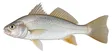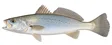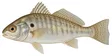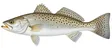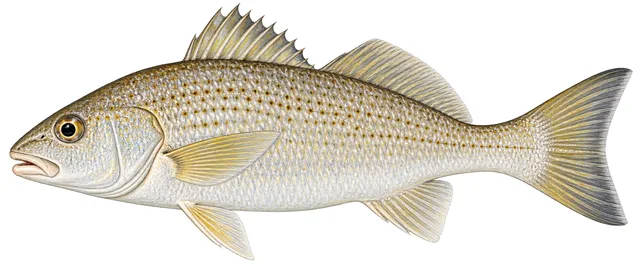
Appearance and identification
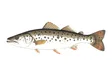
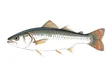
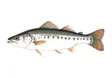
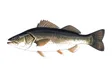
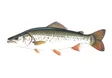
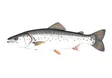
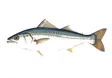
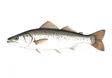
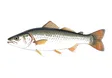
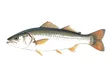
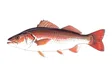
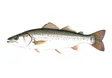
This drum has a sturdy, somewhat flattened body, a broad low head, and relatively large eyes. Its large mouth slopes upward. The chin has six pores but no barbels. A deep notch separates the spiny and soft portions of the dorsal fin, and the tail tapers to a point. The Smithsonian lists a maximum length of 20 cm.
Sources: Stellifer lanceolatus — Star Drum
Habitat and feeding
The species occupies inshore waters over soft bottoms, with a reported depth range of 0–20 m. Its diet includes mobile bottom-dwelling crustaceans such as shrimp and crabs. These habitat and diet descriptions refer to the species; an individual observation does not establish which prey were present at that location.
Sources: Stellifer lanceolatus — Star Drum
Spawning in Texas waters
A Texas larval-recruitment report describes spawning from May through September, with apparent peaks in late May and September. It suggests spawning occurs in deep channels through coastal passes and in nearby Gulf waters. These are regional observations, rather than a calendar established for the entire species range.
Research limits
The sources reviewed here do not establish a dependable lifespan estimate. This account therefore leaves age unspecified rather than borrowing a number from another drum species.
Sources: Stellifer lanceolatus — Star Drum; Larval recruitment report — Star drum account
Guide sources
Research reviewed 2026-10-19.
- Stellifer lanceolatus — Star Drum — Smithsonian Tropical Research Institute
- Larval recruitment report — Star drum account — Texas Water Development Board