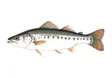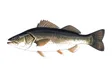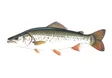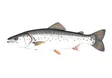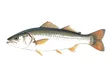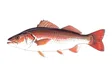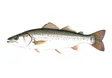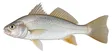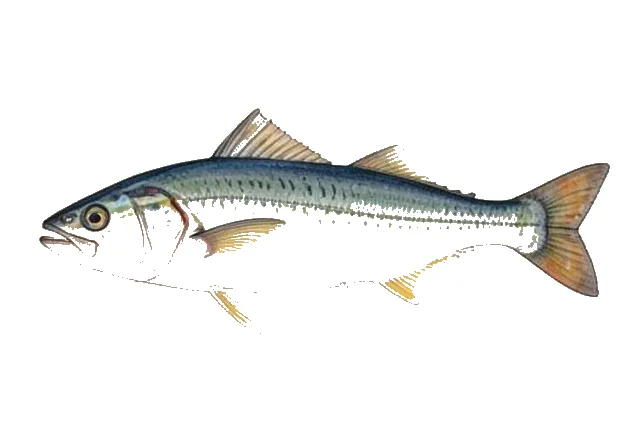
The genus name Menticirrhus comes from the Latin menti- (chin) and -cirrhus (barbel) for the single short protrusion on its chin. Its epithet littoralis, from -litus, is Latin for "of the seashore" as this fish is typically caught from the surf or inshore.
Description
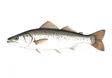
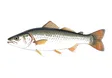
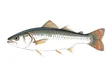
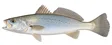
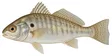
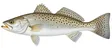
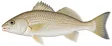
Gulf whiting can grow to about 50 centimetres (20 in). Its appearance is very similar to the Southern kingcroaker (Menticirrhus americanus), albeit with a more solid beige or silvery appearance without dark stripes.
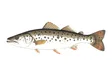
It is distinguished from M. americanus by its more solid beige or silvery color and black dot on the upper caudal tip, sometimes running along the caudal edge. The Brazilian variety of M. littoralis coloration may include much darker or entirely solid black fin tips and extremities. M. americanus can be distinguished by its stripes and lack of black caudal tip.
It is found in places where the seabed is sand or mud, often on sandy beaches. The juveniles can tolerate low salinity levels and are often found in estuaries.
Uses
Menticirrhus littoralis is fished both commercially and by recreational anglers, but is generally considered bycatch. The Florida Fish and Wildlife Conservation Commission classifies Gulf whiting as an unregulated species, and as such recreational anglers are permitted to harvest up to 100 lbs of this species per person per day.
It is considered harmless to humans, docile, and safe to eat if caught from non-polluted waters.
Additional field notes
Gulf kingfish forage near sandy and muddy coastal bottoms.
Food and identification details
FishBase lists worms and crustaceans as the principal foods of Gulf kingfish. Juveniles are especially abundant in the surf zone, while the species also enters estuaries. Its use of both exposed coastal water and estuarine settings means a shoreline record should be interpreted together with the fish’s size and local habitat.
The single stout chin barbel has a pore at its tip. Another detail in the species account is that the scales on the belly are smaller than those along the sides. The back is gray-brown, becoming silvery below, without prominent body bars. These features complement the tail markings used to distinguish it from other kingfish.
Article text: Wikipedia contributors, Menticirrhus littoralis (source revision). Licensed under CC BY-SA 4.0. Retrieved 2026-10-11.