Bighead Carp

Hypophthalmichthys nobilis

Cyprinidae · freshwater and brackish water fish

11 minute read · Species guide

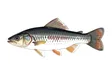
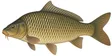
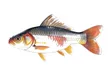
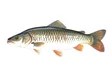
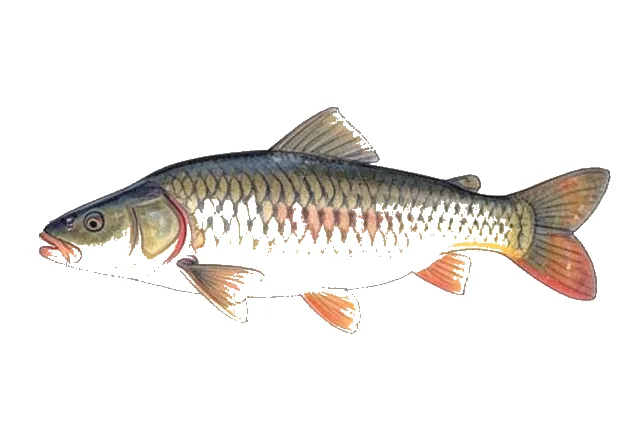
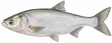
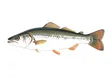
Bighead Carp field guide illustration

About Bighead Carp

The bighead carp (Hypophthalmichthys nobilis) is a species of cyprinid freshwater fish native to East Asia, and is one of several Asian carps introduced into North America. It is one of the most intensively exploited fishes in fish farming, with an annual worldwide production of over three million tonnes in 2013, principally from China. They are omnivores, consuming both algae and zooplankton.

Bighead carp, together with black carp, silver carp, and grass carp, make up the culturally important "four famous domestic fishes" used in polyculture in China for over a thousand years. It is widely farmed for food.

Distribution

Bighead carp are native to large rivers and are associated with floodplain lakes of eastern Asia. Their range extends from southern China north to the Amur River system, which forms the border between China and Russia.

Non-native range

They have been introduced widely outside their native range, including in the United States, where they are considered invasive as they out-compete native species (e.g. bigmouth buffalo). They are also found in the Nile in North Africa.

In the Volga River basin, the Silver carp and Bighead carp are primarily found in the reservoirs of the Lower Volga, the unregulated part, and the delta. There is evidence of natural reproduction (prelarval and early fry stages) in the lower zone of the Volga River Delta.

Description

The bighead carp has a large, scaleless head, a large mouth, and eyes located very low on the head. Adults usually have a mottled silver-gray coloration. It is a large fish; a typical length is 60 cm (2 ft), and maximum observed size of 146 cm (4 ft 9 in) and 40 kg (88 lb 3 oz).

Aquaculture

The bighead carp has a very fast growth rate, which makes it a lucrative and important aquaculture fish, having the fifth-highest production (7.5%) of all cultured freshwater fish worldwide. Its production grew from just 15,306 tonnes in 1950 to 3,059,555 tonnes in 2013, most of the growth being in China.

Invasive species

The value of bighead carp as a food fish has caused it to be exported from its native China to more than 70 other countries, where it has invariably escaped or been intentionally released to the wild. Today, the bighead carp can be found in the wild in Europe, South America and North America. It also has been introduced into most of the Indian subcontinent (India, Pakistan, Bangladesh) and most Southeast Asian countries, as well as to lakes in western China where it is not native. Bighead carp are not always considered undesirable, invasive species where they are introduced outside their native range, and they continue to be stocked in some water bodies to support commercial fisheries. Stocking bighead carp or silver carp usually increases the total biomass of fish available for harvest, but can decrease the catch of native and sometimes more valuable fish.

Bighead carp are considered a highly destructive invasive species in the United States. Bighead carp and the closely related silver carp (H. molitrix) were imported to the United States to remove excess or undesirable plankton, thus improve water quality in sewage treatment plants and aquaculture facilities. However, some fish escaped into the Mississippi River basin, where they are now firmly established. A national plan for the control of Asian carps, including bighead carp, was finalized in late 2007.

In the United States, a limited consumer market has developed for bighead carp, particularly in ethnic communities, and they are farmed in ponds for this purpose. The live or very freshly killed fish is most lucrative. Because of this, bighead carp are often transported live, and may be a high risk factor for the eventual spread of the fish, either through release by the end purchaser, or through escape during transport. Another potential avenue for unintentional spread of bighead carp is through use as live fishing bait.

Communities are attempting to contain the spread of the extremely invasive bighead carp. New York state has banned the import and possession of live bighead carp, with the exception of New York City, where they still may be legally sold in live food markets (but they must be killed before they leave the premises). Possession of live bighead carp has been illegal in Illinois since 2005. Since February 2007, using live bighead carp as fishing bait has been illegal in Missouri. In December 2010, the U.S. Congress banned the importation of bighead carp.

Live bighead carp are also banned from sale in Canada. Several Greater Toronto Area Asian supermarkets have been fined in the past for selling them. The Ontario Ministry of Natural Resources banned the live sale and importation into Ontario in 2004. Fines are only CAD$3500.00 and have done little to deter the possession of this fish; underground selling continues to happen in several Chinese supermarkets in the region. One live carp was found in Toronto's Don River in 2003.

Killed carp can still be sold in stores, but Asian retailers and consumers prefer live over killed fish. Killed carp is cut into pieces: head, fillet and tail.

Singapore

In Singapore, it is known by the Chinese name 松鱼 (sōng yú). The head of the bighead carp is particularly prized in Singapore, and is usually steamed whole.

North America

Although the bighead carp is enjoyed in many parts of the world, it has not become a popular food fish in North America. Acceptance there has been hindered in part by the name "carp", thus popular association with the common carp, which is not a generally favored foodfish in North America. The flesh of the bighead carp is white and firm, and not similar to that of the common carp, which is darker and richer. Bighead carp flesh does share one unfortunate similarity with common carp flesh - both have intramuscular bones within the filet. However, bighead carp captured from the wild in the United States tend to be much larger than common carp, so the intramuscular bones are also larger and less problematic. The Louisiana State University Agricultural Research and Extension Center has a series of videos showing how to prepare the fish and deal with these bones.

Sport fishing

Although bighead carp reach large size, they are difficult to capture with a rod and reel because of their filter-feeding habits. They may be captured by the "suspension method" used to catch silver carp, or where legal, by snagging with a weighted treble hook through the water. When bowfishing, Bighead carp cannot be shot in the air like silver carp, because they do not jump out of the water when startled by moving boats like the silver carp do. However, they often feed near the surface, where they can be shot by bowfishers, for whom they are popular targets.

Article text: Wikipedia contributors, Bighead carp (source revision). Licensed under CC BY-SA 4.0. Retrieved 2026-10-11.
Diet and feeding

The FishTraits compilation records these diet categories for this species: algae or phytoplankton; detritus or unidentified plant material; invertebrates or larval fish. These are broad categories, not a claim that every individual consumes every example in a category.

Reported feeding positions include bottom feeding and surface or water-column feeding. The compilation combines published observations; diets can vary with age, locality, and available food.

Habitat preferences

Reported habitat associations include medium to large rivers.

The source records associations with open water. An association indicates reported use, rather than an exclusive requirement.

Reproduction and parental care

The compilation reports a representative maturity age of 4 years. Its maturity field summarizes mean, median, or modal estimates, usually for females; male estimates can be used when female data are unavailable. It is not a fixed age at which every fish first breeds.

Batch or serial spawning has been reported somewhere in the species’ range. This does not establish the same spawning pattern for every population.

Recorded spawning months are Apr, May, Jun for the source’s reporting region (MS). This is a regional calendar, not a range-wide schedule.

The reproductive-guild classification includes spawning on open substrates without guarding the brood.

Size and recorded longevity

FishTraits reports a maximum total length of 100 centimetres. Some entries use an estimated asymptotic length; this value should not be treated as a certified record catch.

Recorded longevity in the compilation is 10 years. Wild observations were preferred, but captive records were accepted where wild records were unavailable, and unspecified records were assumed wild. The value is not a guaranteed wild lifespan or an aquarium life expectancy.

Identification and appearance

It is very similar to Silver Carp (Hypophthalmichthys molitrix) and can be distinguished by the dark coloration on its side (vs. uniform silvery color) and a smooth keel between the anal and pelvic fins that does not extend forward past the base of the pelvic fins (vs. keel extends forward past the pelvic fin base). Adult Bighead Carp are unlikely to be confused with any North American native minnow species due to the large size and unusual position of the eye; however, juvenile Bighead Carp may be confused for a number of species including Common Carp (Cyprinus carpio), Goldfish (Carassius auratus), Gizzard Shad (Dorosoma cepedianum), and Golden Shiner (Notemigonus crysoleucas)

Native range

Southern and central China (Li and Fang 1990; Robins et al. 1991).

Habitat and ecology

The morphology of the Bighead Carp’s comb-like gill rakers and epibranchial organ allow this species to have a broad and flexible diet. This species is more efficient at filtering larger prey items like zooplankton and large phytoplankton, however in times of zooplankton scarcity Bighead Carp are capable of ingesting particles up to four times smaller than gill raker width (Opusyznski and Shireman 1991). Bighead Carp are also capable of consuming detritus, which in some cases has made up the dominant portion of their diet (Anderson et al. 2016; Boros et al. 2014; Calkins et al. 2012; Kolar et al. 2007).

Female Bighead Carp reach sexual maturity at three years of age, while males can reach sexual maturity in two years; however, this varies significantly with changing environmental conditions (Huet 1970; Kolar et al. 2007). Bigheaded carps are only known to spawn in large, turbulent rivers and it is believed that a rising hydrograph (flood event) is a primary spawning cue (Kolar et al. 2007). However, several studies have shown that rising water levels are not always necessary for spawning—indicating that these fish exhibit a phenotypic plasticity that may facilitate their successful establishment in novel ecosystems (Coulter et al. 2013; Kocovosky et al. 2012; Deters et al. 2012). Fecundity increases with age and body weight and is directly related to growth rate (Verigin et al. 1990). In its native range, Bighead Carp fecundity ranges from 280,000-1.1 million eggs. In North America, fecundity ranged from 4,792-1.6 million eggs (Kipp et al. 2011). Bighead Carp produce eggs that are semi-buoyant and require current to keep them from sinking to the bottom (Soin and Sukhanova 1972; Pflieger 1997). The eggs float for 40-60 hours before hatching.

Bighead Carp can grow rapidly in productive environments. In the Mississippi River, Bighead Carp grew to 1 kg in weight by age 2 and up to 852 mm in length by age 3 (Nuevo et al. 2004).

The oldest Bighead Carp recorded in the United States was believed to be 8-10 years old, and maximum age in China was reported to be 16 years. However, there is a lack of specific information regarding the longevity of this species and it is possible that they can be quite long lived (Kolar et al. 2007).

Introduction history

Bighead Carp were first imported into the United States in 1973 by a private fish farmer in Arkansas who wanted to use them in combination with other phytophagous fishes to improve water quality and increase fish production in culture ponds. In 1974 the Arkansas Game and Fish Commission and Auburn University, Alabama, obtained stock to assess their potential benefits and impacts (Jennings 1988). The species first began to appear in open waters, the Ohio and Mississippi rivers, in the early 1980s, likely as a result of escapes from aquaculture facilities (Jennings 1988). In April 1994, several thousand Bighead Carp, along with a few Black Carp Mylopharyngodon piceus, escaped into the Osage River, Missouri, when high water flooded hatchery ponds at an aquaculture facility near Lake of the Ozarks (Anonymous 1994). Fish that escaped into the Missouri River have increased and spread, since 1990, into the lower Kansas River of Kansas, and elsewhere (Cross and Collins 1995). The species may have dispersed into Oklahoma waters from fish illegally brought into southeast Kansas by a commercial fish farmer in 1988 (Pigg et al. 1993). According to Pigg et al. (1997), collections in the Grand River of Oklahoma since 1991 indicate a gradual downstream dispersal. The species was illegally stocked along with Grass Carp in one or a few ponds in California; these were brought into the state by a commercial aquaculturist. The live fish were reportedly transported in a concealed compartment under a load of black bass in the fall of 1989 from a fish grower in Oklahoma or Arkansas (Dill and Cordone 1997). The species was illegally stocked in Cherry Creek Reservoir, Colorado (P. Walker, personal communication).

Ecological impacts

Invasive carps have been shown to affect zooplankton communities (Burke et al. 1986, Lu et al. 2002, Cooke et al 2009; Calkins et al. 2012; Freedman et al. 2012; Sass et al. 2014).

Freedman et al. (2012) showed that resource use and trophic levels of the fish community change when invasive carps are present. They also demonstrated an impact on Bigmouth Buffalo and found isotopic values similar to Bluegill, Gizzard Shad, and Emerald Shiner.

Irons et al. (2007) showed significant declines in body condition of Gizzard Shad and Bigmouth Buffalo following invasion by Silver and Bighead carps. They state that ultimately, declines in body condition may decrease fecundity.

Record fish

State records in 2 states

  • Oklahoma118 lbs 10.00 ozs

    Neosho (Grand) River · 04/26/2025 · Bryan Lee Baker · rod and line

  • Wisconsin67 lbs. 3.2 oz.

    Wisconsin River · Sauk · 04/29/2022

Each figure is the state agency’s own certified record. The site holds record tables for 11 states so far, so a state missing here has not been read yet. It is not a state where this fish holds no record.

Range

Where it lives

Share of 312 GBIF observation records with a state location, across 20 states. The orange dots are USGS stream-survey sites where this species was caught.
0%
32.7%
Share of 312 GBIF observation records with a state location, across 20 states. The orange dots are USGS stream-survey sites where this species was caught.

A blank area on the dot layer usually means nobody sampled there, not that the fish is absent. Turn on “every survey site” to see where the survey looked.

The USGS stream survey caught it at 27 of its sites, in 9 states. That survey and the GBIF records are two different counts of two different things, so the site keeps them apart.

Habitat

Water and movement

Water
WoRMS records this species in fresh water and brackish water.
USGS NAS habitat
Freshwater
US status
Exotic — the USGS Nonindigenous Aquatic Species database lists it as introduced from outside North America.
Migration
Migratory
Pattern

Classification

Taxonomy

Kingdom
Animalia
Phylum
Chordata
Superclass
Actinopterygii
Class
Teleostei
Order
Cypriniformes
Genus
Hypophthalmichthys
Species
Hypophthalmichthys nobilis
ITIS TSN
163692
WoRMS AphiaID
154600
GBIF key
2362486
Outside the US
ITIS also files it in Mexico.

Common questions about Bighead Carp

What is the scientific name of Bighead Carp?
The scientific name is Hypophthalmichthys nobilis, in the family Cyprinidae. Classification follows ITIS.
Does Bighead Carp live in fresh water or salt water?
WoRMS records this species in fresh water and brackish water.
Where has Bighead Carp been recorded in the United States?
GBIF has observations in 20 states, with the most records in Illinois, Arkansas, Kansas. The map shows observation records, which do not establish the complete natural range.

Closest relatives

Other Hypophthalmichthys species

Same family

More Cyprinidae