Bitterling

Rhodeus sericeus

Cyprinidae · freshwater water fish

3 minute read · Species guide

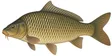
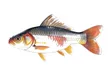
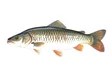
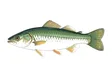
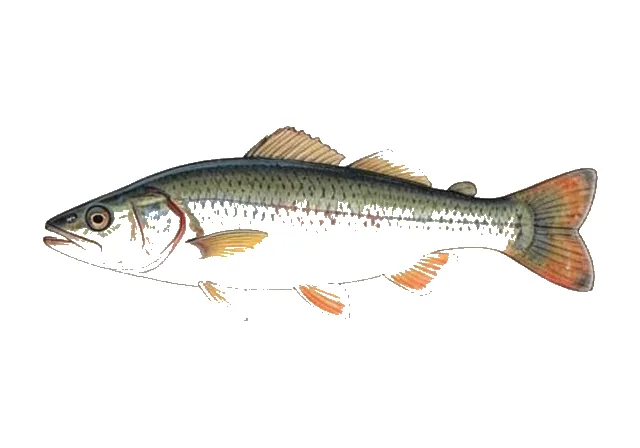
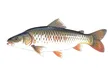
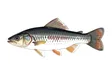
Bitterling field guide illustration

About Bitterling

The Amur bitterling (Rhodeus sericeus) is a small fish of the carp family. It is sometimes just called "bitterling", which dates back to the time when the European bitterling (Rhodeus amarus) was still considered conspecific with R. sericeus, and "bitterling" properly refers to any species in the entire genus Rhodeus. The Amur bitterling is found in Siberia, while the European bitterling is found from European Russia westwards.

Mussels form an essential part of their reproductive system, with bitterling eggs being laid inside them. Long thought to be symbiotic with the mussels (whose larval phase attaches to fish gills during development), recent research has indicated they are, in fact, parasitic, with co-evolution being seen in Chinese bitterling and mussel species.

Bitterlings usually reside in areas with dense plant growth. They are hardy fish and can survive in water that is not very well oxygenated. They grow to be 3–4 in (76–102 mm) long at most. The bitterling's diet consists of plant material and small larvae of insects.

Colour variation

Transparent scale variants of bitterlings occur, though not commonly, and are exploited in the aquarium trade.

Additional field notes

Bitterling reproduction depends on living freshwater mussels.

Sources: Rhodeus sericeus species summary

Development inside a mussel

FishBase describes the female placing eggs within a freshwater mussel using an elongated ovipositor. The young later leave this refuge at about 10 millimetres in length, roughly 28 days after hatching. This stage of the life cycle ties successful reproduction to suitable mussel hosts as well as to the fish’s own habitat.

Sources: Rhodeus sericeus species summary

Guide sources

Research reviewed 2026-10-19.

Article text: Wikipedia contributors, Amur bitterling (source revision). Licensed under CC BY-SA 4.0. Retrieved 2026-10-11.
Diet and feeding

The FishTraits compilation records these diet categories for this species: invertebrates or larval fish. These are broad categories, not a claim that every individual consumes every example in a category.

Habitat preferences

Reported habitat associations include streams and small rivers, still-water habitats.

The source records associations with muck, sand. An association indicates reported use, rather than an exclusive requirement.

Size and recorded longevity

FishTraits reports a maximum total length of 11 centimetres. Some entries use an estimated asymptotic length; this value should not be treated as a certified record catch.

Identification and appearance

Distinguishing characteristics were provided by Berg (1949), Moore (1968), and Page and Burr (1991). Keys were included in Berg (1949) and Moore (1968). Illustrations or photographs appeared in Berg (1949), Maitland (1977), and Axelrod et al. (1985). Another name used for this species is. Berg (1949) apparently recognized two species: R. s. amarus and R. s.Rhodeus amarus sericeus.

Native range

Europe from the Seine and other rivers of France eastward to Asia Minor, and northern China (there is a very wide geographical gap in the northern part of the Asian continent separating the ranges of the two subspecies) (Berg 1949; Lee et al. 1980 et seq.).

Introduction history

Probable aquarium release (Myers 1925; Bade 1926; Lee et al. 1980 et. seq.; Schmidt et al. 1981).

Range

Where it lives

Share of 1 GBIF observation records with a state location, across 1 states.
0%
100%
Share of 1 GBIF observation records with a state location, across 1 states.

Share of records by state

Habitat

Water and movement

Water
WoRMS records this species in fresh water.
USGS NAS habitat
Freshwater
US status
Exotic — the USGS Nonindigenous Aquatic Species database lists it as introduced from outside North America.
Migration
Migratory
Pattern

Classification

Taxonomy

Kingdom
Animalia
Phylum
Chordata
Superclass
Actinopterygii
Class
Teleostei
Order
Cypriniformes
Genus
Rhodeus
Species
Rhodeus sericeus
ITIS TSN
163607
WoRMS AphiaID
154613
GBIF key
2360803

Common questions about Bitterling

What is the scientific name of Bitterling?
The scientific name is Rhodeus sericeus, in the family Cyprinidae. Classification follows ITIS.
Does Bitterling live in fresh water or salt water?
WoRMS records this species in fresh water.
Where has Bitterling been recorded in the United States?
GBIF has observations in 1 states, with the most records in New York. The map shows observation records, which do not establish the complete natural range.

Same family

More Cyprinidae