Silver Carp

Hypophthalmichthys molitrix

Cyprinidae · freshwater and brackish water fish

13 minute read · Species guide

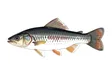
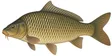
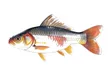
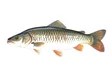
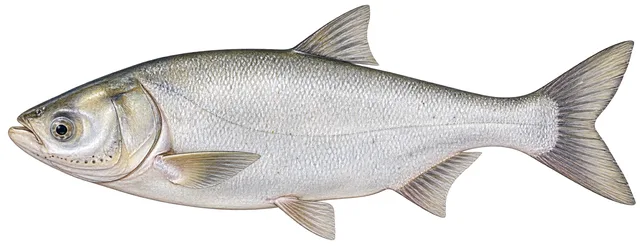
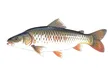
Silver Carp field guide illustration

About Silver Carp

The silver carp or silverfin (Hypophthalmichthys molitrix) is a species of freshwater cyprinid fish, a variety of Asian carp native to China and eastern Siberia, from the Amur River drainage in the north to the Xi Jiang River drainage in the south. Although a threatened species in its natural habitat, it has long been cultivated in China as one of the "four famous domestic fish" (四大家鱼) together with bighead carp, black carp, and grass carp. By weight, more silver carp are produced worldwide in aquaculture than any other species of fish except for the grass carp. Silver carp are usually farmed in polyculture with other Asian carp, or sometimes with catla or other fish species.

The species has also been introduced, or spread by connected waterways, to at least 88 countries around the world. The reason for importation was generally for use in aquaculture, but enhancement of wild fisheries and water quality control have also been intended on occasion. In some of these places, the species is considered invasive.

The silver carp reaches a typical length of 60–100 cm (24–39 in) with a maximum length of 140 cm (55 in) and weight of 50 kg (110 lb).

Diet

The silver carp is a filter feeder, and possesses a specialized feeding apparatus capable of filtering particles as small as 4 μm. The gill rakers are fused into a sponge-like filter, and an epibranchial organ secretes mucus, which assists in trapping small particles. A strong buccal pump forces water through this filter. Silver carp, like all Hypophthalmichthys species, have no stomachs; they are thought to feed more or less constantly, largely on phytoplankton, and also consume zooplankton and detritus. In places where this plankton-feeding species has been introduced, it is thought to compete with native planktivorous fishes, which in North America include paddlefish (Polyodon spathula), bigmouth buffalo (Ictiobus cyprinellus), gizzard shad (Dorosoma cepedianum), and young fish of almost all species.

Because they feed on plankton, they are sometimes successfully used for controlling water quality, especially in the control of noxious blue-green algae (cyanobacteria). Certain species of blue-green algae, notably the often toxic Microcystis, can pass through the gut of silver carp unharmed, picking up nutrients in the process. Thus, in some cases, blue-green algae blooms have been exacerbated by silver carp, and Microcystis has also been shown to produce more toxins in the presence of silver carp. These carp, which have natural defenses to their toxins, sometimes can contain enough algal toxins in their systems to become hazardous to eat.

Ecology and conservation

Silver carp in their natural range migrate upstream for spawning; eggs and larvae then drift downstream, and young fish hatch in the floodplain zone. Larvae and small juveniles feed on zooplankton, switching to phytoplankton once a certain size is reached. The species is somewhat sensitive to low oxygen conditions.

The species is currently classified as near threatened in its original range, as its habitat and reproductive behavior are impacted by construction of dams, pollution, and overfishing. Population declines appear to have been particularly significant in the Chinese parts of its range.

In the Volga River basin, the Silver carp and Bighead carp are primarily found in the reservoirs of the Lower Volga, the unregulated part, and the delta. There is evidence of natural reproduction (prelarval and early fry stages) in the lower zone of the Volga River Delta.

Sport fishing

Silver carp are filter feeders, thus are difficult to catch on typical hook-and-line gear. Special methods have been developed for these fish, the most important being the "suspension method", usually consisting of a large dough ball that disintegrates slowly, surrounded by a nest of tiny hooks embedded in the bait. The entire apparatus is suspended below a large bobber. The fish feed on the small particles released from the dough ball and bump against the dough ball, with the intention of breaking off more small particles that can be filtered from the water, eventually becoming hooked on the tiny hooks.

In some areas, using "snagging gear", in which large, weighted treble hooks are jerked through the water, is legal to snag the fish. In the United States, silver carp are also popular targets for bowfishing; they are shot both in the water and in the air. In the latter case, powerboats are used to scare the fish and entice them to jump out of the water, and the fish are shot when they are airborne.

Related species

Two other species are in the genus Hypophthalmichthys, the bighead carp (H. nobilis) and the largescale silver carp (H. harmandi). The genus name Aristichthys has also sometimes been used for bighead carp, but is deprecated. The bighead carp differs from the silver carp in its behavior (it does not leap from the water when startled) and also in its diet. Bighead carp are also filter feeders, but they filter larger particles than silver carp, and in general consume a greater proportion of zooplankton in their diets than silver carp, which consume more phytoplankton. In at least some parts of the United States, bighead and silver carp hybridize in the wild and produce fertile offspring.

The largescale silver carp is closely related to the silver carp, but its native range is to the south of that of the silver carp, mostly within Vietnam. Unlike bighead and silver carp, largescale silver carp have not been widely introduced around the world for use in aquaculture, although at least one introduction was made to some waters of the Soviet Union, where they hybridized with the introduced silver carp.

In North America

Silver carp were imported to North America in the 1970s to control algal growth in aquaculture and municipal wastewater treatment facilities, but escaped from captivity soon after their importation, and are now considered a highly invasive species.

Silver carp, with the closely related bighead carp, often reach extremely high population densities, and are known to have undesirable effects on the local environments and native species, including the bigmouth buffalo. They have spread into the Mississippi, Illinois, Ohio, Missouri, Tennessee, Wabash Rivers, and many of their tributaries in the United States, and are abundant in the Mississippi catchment from Louisiana to South Dakota and Illinois. Dams seem to have slowed their advance up the Mississippi River, and until late November 2008, silver carp had not been captured north of central Iowa on the Mississippi. Dams that do not have navigation locks are complete barriers to natural upstream movement of silver carp, unless fishermen unintentionally assist this movement by the use of silver carp as bait.

In 2020, Alabama Department of Conservation and Natural Resources found silver carp in Alabama's Pickwick and Wheeler reservoirs on the Tennessee River, but the species has not expanded its range in Alabama's waterways.

The Tennessee Valley Authority (TVA) has considered several methods to control the spread of Asian carp, including fish barriers at 10 locks controlled by the TVA. One is a bioacoustics fish fence, which uses a combination of sound, light, and air bubbles. These barriers are installed at Barkley Lock and Dam in Kentucky and are currently being studied for their effectiveness in deterring Asian carp. Other types of barriers used for Asian carp include carbon dioxide and electricity. The TVA has conducted environmental impact studies to minimize the impact of the barriers on native species. The TVA has also considered adjusting flow rates during Asian carp spawning periods, which are usually during high-water events, as Asian carp eggs are only semibuoyant and sink to the bottom and die with low river flow.

The silver carp is sometimes called the "flying"carp for its tendency to leap from the water when startled; it can leap up to 10 ft (3.0 m) into the air. Boaters traveling in uncovered high-speed watercraft have been reported to be injured by running into airborne fish while at speed. A leaping silver carp broke the jaw of a teenager being pulled on an inner tube, and water skiing in areas where silver carp are present is extremely dangerous. Peculiarly, the extreme jumping behavior appears to be unique to silver carp of North America; those in their native Asian range and introduced to other parts of the world are much less prone to jumping. Although theories have been proposed (for example, the high densities the species reaches in parts of North America, or that the introduced North American population may have been based on a small number of particularly"jumpy" individuals), the reason for these geographic differences is not known for certain.

Article text: Wikipedia contributors, Silver carp (source revision). Licensed under CC BY-SA 4.0. Retrieved 2026-10-11.
Diet and feeding

The FishTraits compilation records these diet categories for this species: algae or phytoplankton; detritus or unidentified plant material; invertebrates or larval fish. These are broad categories, not a claim that every individual consumes every example in a category.

Reported feeding positions include bottom feeding and surface or water-column feeding. The compilation combines published observations; diets can vary with age, locality, and available food.

Habitat preferences

Reported habitat associations include medium to large rivers.

The source records associations with sand, open water. An association indicates reported use, rather than an exclusive requirement.

Reproduction and parental care

The compilation reports a representative maturity age of 6 years. Its maturity field summarizes mean, median, or modal estimates, usually for females; male estimates can be used when female data are unavailable. It is not a fixed age at which every fish first breeds.

Recorded spawning months are Apr, May, Jun, Jul for the source’s reporting region (MS). This is a regional calendar, not a range-wide schedule.

The reproductive-guild classification includes spawning on open substrates without guarding the brood.

Size and recorded longevity

FishTraits reports a maximum total length of 105 centimetres. Some entries use an estimated asymptotic length; this value should not be treated as a certified record catch.

Recorded longevity in the compilation is 10 years. Wild observations were preferred, but captive records were accepted where wild records were unavailable, and unspecified records were assumed wild. The value is not a guaranteed wild lifespan or an aquarium life expectancy.

Identification and appearance

Silver Carp are very similar to Bighead Carp (H. nobilis) and can be distinguished by the greenish/silvery color (vs. dark side blotches) and a smooth abdominmal keel that extends forward past the pelvic fins to the gills (vs. belly keel limited to between the anal fins and pelvic fins), a smaller head, and highly branched, sponge-like gill rakers (vs. long, comb-like gill rakers).

Silver carp are unlikely to be confused with native cyprinids due to size and unusual position of the eye. They are most similar to bighead carp (H. nobilis) but have a smaller head, and upturned mouth without teeth, a keel that extends forward past pelvic fin base, lack the dark blotches characteristic of bighead carp and have highly branched gill rakers. Adult Silver Carp are unlikely to be confused with any North American native minnow species due to the large size and unusual position of the eye; however, juvenile Silver Carp may be confused for a number of species including Common Carp (Cyprinus carpio), Goldfish (Carassius auratus), Gizzard Shad (Dorosoma cepedianum), and Golden Shiner (Notemigonus crysoleucas)

Juvenile fish lack spines in fins. Metalarvae and early juvenile are similar to Bighead Carp but pectoral fin extends only to base of pelvic fin (as opposed to beyond in the pelvic fin in bighead)

The species is known for leaping out of the water when startled (e.g., by noises such as a boat motor).

Native range

Several major Pacific drainages in eastern Asia from the Amur River of far eastern Russia south through much of eastern half of China to Pearl River, possibly including northern Vietnam (Berg 1949; Li and Fang 1990).

Habitat and ecology

Silver Carp feed on both phytoplankton and zooplankton (Radke and Kahl 2002) but in contrast to the Bighead Carp (Hypophthalmichthys nobilis), which is more effective at filtering larger plankton (zooplankton), the Silver Carp’s dense gill rakers allow it to be more efficient at filtering smaller prey (typically phytoplankton) (Dong and Li 1994). Although they are primarily planktivores, Bighead and Silver carp have broad, flexible diets and in some cases have been observed to feed on detritus and biodeposits (Calkins et al. 2012; Boros et al. 2014; Anderson et al. 2016).

Maturation rate of Bighead and Silver carp has been found to be related to water temperature (Kolar et al. 2005, 2007). In their native range, Silver Carp reach maturity between 4 and 8 years old but are noted in North America to mature as early as 2 years old and can live up to 20 years (Williamson and Garvey 2005; Kolar et al. 2007). In the Wabash River, broad-scale migration of Silver Carp occurs in the fall prior to overwintering, and in the spring 1-2 months prior to the onset of spawning (Coulter et al. 2016). Spawning grounds are typically characterized by rapidly flowing (current velocity= 0.6-2.3 m/s), turbid water that ranges from 18-30 °C with suspended solids limiting visibility often to 10-15 cm (Kolar et al. 2007). Spawning is often initiated by rising water levels and heavy rains in the spring (Kolar et al. 2007; Chapman et al. 2013; Erickson et al. 2016). However, rising hydrographs are not always necessary for spawning—indicating that these fish exhibit a phenotypic plasticity that may facilitate their successful establishment in novel ecosystems (Deters et al. 2012; Kocovosky et al. 2012; Coulter et al. 2013). Silver Carp fecundity is high; females weighing 6.4–12.1 kg were observed to produce 597,000–4,329,600 eggs per fish (Kolar et al. 2007). Williamson and Garvey (2005) observed that fecundity of six Silver Carp in the middle Mississippi River ranged from 57,283–328,538 eggs. It was initially believed that successful spawning required 100 km river in order to allow sufficient egg development (Kolar et al. 2007), but this notion has been disproven by several models and field observations. Evidence has shown that water quality parameters—particularly water temperature—and hydrologic factors of a river are major determinants of spawning suitability (Kocovosky et al. 2012; Chapman et al. 2013; Murphy and Jackson 2013; Cuddington et al. 2014). Given the right temperature and flow conditions, river reaches as short as 25 km may allow for the successful development of Invasive Carp eggs (Murphy and Jackson 2013).

Introduction history

Silver Carp was imported and stocked for phytoplankton control in eutrophic water bodies and also apparently as a food fish. It was first brought into the United States in 1973 when a private fish farmer imported Silver Carp into Arkansas (Freeze and Henderson 1982). By the mid 1970s Silver Carp was being raised at six state, federal, and private facilities, and by the late 1970s it had been stocked in several municipal sewage lagoons (Robison and Buchanan 1988). By 1980 it was discovered in natural waters, probably a result of escapes from fish hatcheries and other types of aquaculture facilities (Freeze and Henderson 1982). The occurrence of Silver Carp in the Ouachita River of the Red River system in Louisiana was likely the result of an escape from an aquaculture facility upstream in Arkansas (Freeze and Henderson 1982). The Florida introduction was probably a result of stock contamination, a Silver Carp having been inadvertently released with Grass Carp being used for aquatic plant control (Middlemas 1994). In a similar case, the species was apparently introduced accidentally to an Arizona lake as part of an intentional, albeit illegal, stock of diploid Grass Carp (W. Silvey, personal communication). Pearson and Krumholz (1984) suggested that individuals taken from the Ohio River may have come from plantings in local ponds or entered the Ohio River from populations originally introduced in Arkansas.

Ecological impacts

Bighead and Silver Carp have been shown to affect zooplankton communities (Burke et al. 1986, Lu et al. 2002, Cooke et al. 2009; Calkins et al. 2012; Freedman et al. 2012; Sass et al. 2014).

Freedman et al. (2012) showed that resource use and trophic levels of the fish community change when Bighead and Silver Carp are present. They also demonstrated an impact on Bigmouth Buffalo and found isotopic values similar to Bluegill, Gizzard Shad, and Emerald Shiner. Irons et al. (2007) showed significant declines in body condition of Gizzard Shad and Bigmouth Buffalo following invasion by Silver and Bighead carps. They state that ultimately, declines in body condition may decrease fecundity.

Range

Where it lives

Share of 653 GBIF observation records with a state location, across 19 states. The orange dots are USGS stream-survey sites where this species was caught.
0%
28%
Share of 653 GBIF observation records with a state location, across 19 states. The orange dots are USGS stream-survey sites where this species was caught.

A blank area on the dot layer usually means nobody sampled there, not that the fish is absent. Turn on “every survey site” to see where the survey looked.

The USGS stream survey caught it at 109 of its sites, in 11 states. That survey and the GBIF records are two different counts of two different things, so the site keeps them apart.

Habitat

Water and movement

Water
WoRMS records this species in fresh water and brackish water.
USGS NAS habitat
Freshwater
US status
Exotic — the USGS Nonindigenous Aquatic Species database lists it as introduced from outside North America.
Migration
Migratory
Pattern

Classification

Taxonomy

Kingdom
Animalia
Phylum
Chordata
Superclass
Actinopterygii
Class
Teleostei
Order
Cypriniformes
Genus
Hypophthalmichthys
Species
Hypophthalmichthys molitrix
ITIS TSN
163691
WoRMS AphiaID
154319
GBIF key
2362473
Outside the US
ITIS also files it in Mexico.

Common questions about Silver Carp

What is the scientific name of Silver Carp?
The scientific name is Hypophthalmichthys molitrix, in the family Cyprinidae. Classification follows ITIS.
Does Silver Carp live in fresh water or salt water?
WoRMS records this species in fresh water and brackish water.
Where has Silver Carp been recorded in the United States?
GBIF has observations in 19 states, with the most records in Illinois, Arkansas, Missouri. The map shows observation records, which do not establish the complete natural range.

Closest relatives

Other Hypophthalmichthys species

Same family

More Cyprinidae