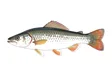
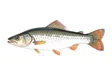
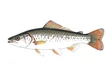
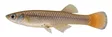
Common names

Types of gambusia

9 species carry gambusia in an English common name. They sit in 1 family, so the group is a name, not a scientific rank.

About gambusia

Gambusia is a large genus of viviparous fish in the family Poeciliidae (order Cyprinodontiformes). Gambusia contains over 40 species, most of which are principally found in freshwater habitats, though some species may also be found in brackish or saltwater habitats. The genus Gambusia comes from the Cuban term gambusino which means 'free-lance miner' or may be related to Spanish gamusino, an imaginary animal used in a practical joke similar to the snipe hunt. The type species is the Cuban gambusia, G. punctata. The greatest species richness is in Mexico, Texas, and the Greater Antilles, but species are also found elsewhere in the eastern and southern United States, the Bahamas, Central America, and Colombia. Gambusia species are often called topminnows, or simply gambusias; they are also known as mosquitofish, which, however, refers more specifically to two species, G. affinis and G. holbrooki, which are often introduced into ponds to eat mosquito larvae. As a consequence, they have been introduced widely outside their native range, and frequently become invasive, threatening local species. G. affinis and G. holbrooki are now established in many parts of the world and are likely to continue to spread as climatic conditions change. They are only occasionally kept in aquariums, due to their relative lack of color and the highly aggressive nature of the aforementioned mosquitofish species.

Nine species are listed as vulnerable in the IUCN Red List; two, the widemouth gambusia, G. eurystoma, and the crescent gambusia, G. hurtadoi, are critically endangered; and two, the Amistad gambusia, G. amistadensis, and the San Marcos gambusia, G. georgei, are already extinct.
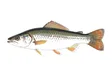
Gambusia species in focus

These species profiles show how members of the group differ. Their biology describes each named species, rather than every fish in the group.

Mangrove Gambusia

The Mangrove gambusia (Gambusia rhizophorae) is a tropical poeciliid (live bearing) fish species with a restricted, disjunct range one in northwestern Cuba, the other in southeastern Florida. The Florida population has been recently listed as "biologically vulnerable" (vulnerable to extinction because of the taxon's biology or other indicators) by the Florida Fish and Wildlife Conservation Commission.

Species description

The Mangrove gambusia is a brackish fish, typically a resident of sheltered mangrove forests. In Florida, the species is distributed from Fort Lauderdale, south along the mainland coast, and throughout the Florida Keys to Key West. Its distribution in Florida appears to be temperature limited (Getter, 1982). The exact location of the Cuban population is being examined to allow a map of its distribution to be produced.

Conservation

Habitat destruction for development has reduced available habitats through loss of a number of mangrove forests and formerly occupied sites (Charles Getter, 1976) in Florida. Also contributing to biological vulnerability is the species' limited habitat, temperature restrictions, and hybridization with other species throughout its range (Charles Getter, 1976). One of the largest populations known for the Mangrove gambusia was the lush 100+ acre mangrove forest known as the "Cocoplum Islands" that was developed into the Cocoplum Development in the mid-1970s.

Biology and life history

Ongoing research is underway by Dr. Charles Getter, who has studied the species since the 1970s.

Read the full species guide.

Amistad Gambusia

The Amistad gambusia (Gambusia amistadensis) is an extinct species of small fish known only from a single locality, the large vegetated Goodenough Spring in Val Verde County, Texas. It apparently was driven to extinction in the wild when its habitat was submerged to a depth of about 70 feet by the construction of the Amistad Reservoir in 1968. The two captive populations, at the University of Texas System and the Dexter National Fish Hatchery in New Mexico, later failed through hybridization with the related mosquitofish and predation. The species has been classified as extinct by the United States Fish and Wildlife Service since 1987, and by the IUCN since 2013.

Read the full species guide.

Big Bend Gambusia

The Big Bend gambusia (Gambusia gaigei) is a rare species of fish in the family Poeciliidae. It is endemic to the Big Bend region of the Rio Grande of the United States and Mexico. The only known remaining population is in a protected pond in the Big Bend National Park.

This livebearer is about 2 inches (5.1 cm) long. It feeds on aquatic invertebrates.

Read the full species guide.

Range

Where gambusia live

How many of the 9 species are recorded in each state.
0
8
How many of the 9 species are recorded in each state.

Species

All 9 gambusia species