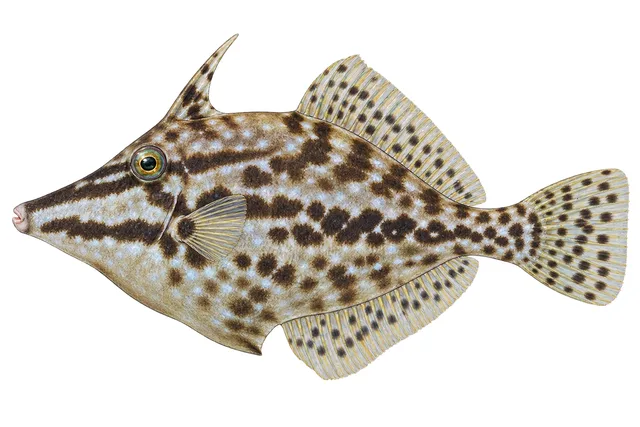
Appearance and identification
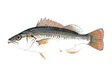
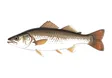
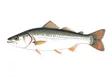
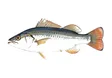
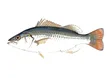
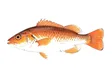
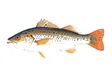
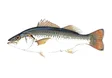
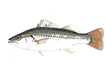
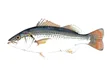
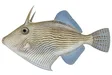
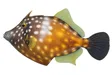
The body is compressed and slender, with a small mouth at the end of an elongated snout. A prominent dorsal spine can lock upright. Brown, reddish brown, and gray shades occur, often with a network of pale lines. The Smithsonian reports a maximum length of 9 cm.
Range, habitat, and diet
The Smithsonian range extends from the Carolinas into the southern Caribbean. Slender filefish use sandy and rocky habitats and are common in seagrass beds; the reported depth range is 3–98 m. Their food includes mobile bottom-dwelling crustaceans, including shrimp and crabs.
Camouflage in motion
A 2015 field study documented changes in appearance within one to three seconds. Researchers described combinations of spots, stripes, and bars, together with skin flaps that complicate the outline of the body. Posture and swimming orientation also contribute to concealment among soft corals and algae.
The study found that many fish matched nearby visual features more closely than the wider background. Its results suggest that several camouflage mechanisms work together to make a filefish harder for a visual predator to detect or recognize. That interpretation concerns concealment; it does not establish that every color change serves the same purpose.
Early life and research limits
The Smithsonian account records bottom-associated eggs and larvae living in open water. The sources reviewed for this guide do not establish a lifespan or a range-wide breeding season, so neither is estimated here.
Guide sources
Research reviewed 2026-10-19.
- Monacanthus tuckeri — Slender Filefish — Smithsonian Tropical Research Institute
- Adaptive body patterning, three-dimensional skin morphology and camouflage measures of the slender filefish Monacanthus tuckeri on a Caribbean coral reef — Allen, Akkaynak, Sugden & Hanlon; Biological Journal of the Linnean Society (2015)