Description
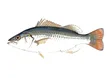
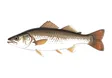
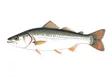
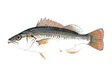
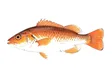
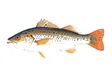
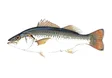
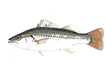
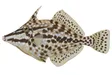
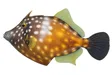
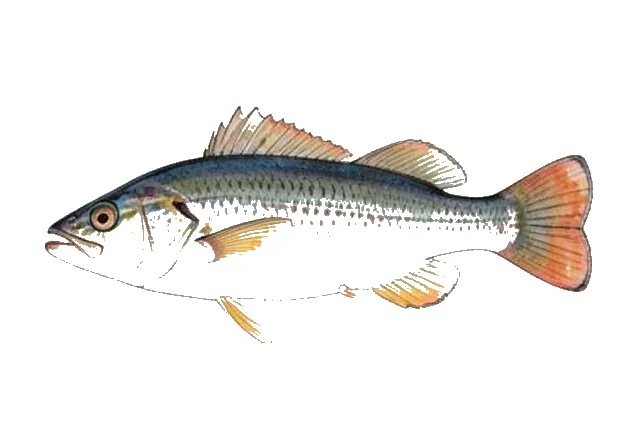
The fantail filefish has a tan body with black spots, yellow dorsal fins, and an orange tail. This species has a flat body, an asymmetrical head and dark lines with many spots on the body. In addition, the mouth area is white. Their tail or caudal fin is red or orange and their soft dorsal and anal fins are yellowish. Fantail filefish weigh 14.3–18.7 g (0.50–0.66 oz), while their brain weighs 113-116 mg.
Population
Between 1985 to 1988, larger numbers of Pervagor spilosoma were observed than usual. In big numbers, Pervagor spilosoma, usually stay within shallow habitats.
Behavior
Fantail filefish are rarely aggressive towards other species. Although, they do tend to be aggressive towards conspecifics.
Diet
Fantail filefish feed primarily on algae and zoobenthos. This species consumes macroalgae such as seaweed, microalgae, tubeworms and small crustaceans including krill.
Distribution and habitat
Fantail filefish are found inf the Eastern Pacific, including the Hawaiian Islands and Johnston Island. Fantail filefish live within coral reefs and areas that are rocky or have rubble and sand. They frequent waters that are 6–730 metres (20–2,395 ft) deep, and can survive in temperatures ranging from 41.9 to 83.4 °F (5.5 to 28.6 °C).
Human use
Within the aquarium trade, fantail filefish are rare to have. It is advised that this species has an aquarium size of 75 gallons or more. The water conditions should have a salinity of 1.020-1.025 for this filefish species. The behavior of fantail filefish might change to aggressive with similar species. At first, these fish may come off as timid, but sooner or later, they become accustomed to living in new aquariums. Fantail filefish require good hiding places, so having rocks or other items would benefit this fish. Aquariums with invertebrates or reef aquariums are best to avoid because they will eat many invertebrates.
Additional field notes
Fantail filefish have a compressed body and a distinctive banded tail.
Sources: Pervagor spilosoma species summary
Finer identification details
FishBase describes a dark band close to the outer edge of the orange or red tail, rather than a uniformly colored fin. Irregular oblique head lines merge into the dense body spotting, while the mouth region and lips remain white. Its feeding account includes corals alongside algae and small bottom-dwelling invertebrates, adding another component to its varied reef diet.
Sources: Pervagor spilosoma species summary
Article text: Wikipedia contributors, Pervagor spilosoma (source revision). Licensed under CC BY-SA 4.0. Retrieved 2026-10-11.