Orinoco Sailfin Catfish

Pterygoplichthys multiradiatus

Loricariidae · freshwater water fish

4 minute read · Species guide

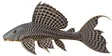
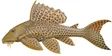
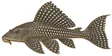
Orinoco Sailfin Catfish field guide illustration

About Orinoco Sailfin Catfish

Pterygoplichthys multiradiatus is one of several tropical fish commonly known as Orinoco sailfin catfish, plecostomus (or plecos). It belongs to the armored catfish family (Loricariidae). Named for its sail-like dorsal fin, the part of its scientific name multiradiatus means "many-rayed" and refers to the rays of the dorsal fin. P. multiradiatus is one of a number of species commonly referred to as the common pleco by aquarists.

Other scientific names that were used (as synonyms) for P. multiradiatus include Hypostomus multiradiatus, Ancistrus multiradiatus, and Liposarcus multiradiatus. P. multiradiatus is sometimes confused with Pterygoplichthys pardalis, which is a different species of pleco. P. multiradiatus goes by a number of common names. It can be called the "long-fin armored catfish"in Hawaii,"sailfin catfish", "sailfish catfish", "many-rayed (multiradiatus) pleco"or"radiated ptero" in the United States, 多輻翼甲鯰 in Mandarin Chinese. P. multiradiatus is mottled brown/black and inhabits freshwater streams and lakes and in weedy, mud-bottomed canals in its native habitat: the Orinoco River basin in Venezuela. Its geographic distribution is 10°N - 1°N, 68°W - 61°W. This tropical, nocturnal bottom-dweller likes warm water at the temperature range of 23–27 °C (73–81 °F), pH range: 6.5–7.8, and dH range: 4–20.

P. multiradiatus browses on substrate, mainly feeding on benthic algae and aquatic weeds, but will also take worms, insect larvae and other bottom-dwelling invertebrates as food.

One of the large plecos (growing to a maximum of 50.0 centimetres (19.7 in) TL), this species likes solitude, is relatively peaceful as an aquarium fish and does well with cichlids and other big fish, and should be kept in large tanks only and with plenty of rocks and driftwood in which to hide. Like many other plecos, it is very important in the aquarium trade.

Invasive introduction and range

P. multiradiatus has been introduced to Taiwan, Puerto Rico, Florida, Hawaii, Texas, India, and Mexico, most likely as the result of escapes or releases from aquarium fish farms. This species is firmly established in these and other locations, where it is regarded as a harmful invasive species being relatively inedible to people and predators, causing damage to fishing gear, competing and harming against native species and disrupting environments by its burrowing activities. In this context its relative, Hypostomus plecostomus, has also been similarly implicated though it seems likely that in Asia, both or related species are implicated.

Article text: Wikipedia contributors, Pterygoplichthys multiradiatus (source revision). Licensed under CC BY-SA 4.0. Retrieved 2026-10-11.
Diet and feeding

The FishTraits compilation records these diet categories for this species: algae or phytoplankton; detritus or unidentified plant material; invertebrates or larval fish. These are broad categories, not a claim that every individual consumes every example in a category.

Reported feeding positions include bottom feeding. The compilation combines published observations; diets can vary with age, locality, and available food.

Habitat preferences

Reported habitat associations include medium to large rivers, still-water habitats.

The source records associations with muck, vegetation. An association indicates reported use, rather than an exclusive requirement.

Reproduction and parental care

The compilation reports a representative maturity age of 1 years. Its maturity field summarizes mean, median, or modal estimates, usually for females; male estimates can be used when female data are unavailable. It is not a fixed age at which every fish first breeds.

Recorded spawning months are Apr, May, Jun, Jul, Aug, Sep for the source’s reporting region (Zzz). This is a regional calendar, not a range-wide schedule.

The reproductive-guild classification includes guarding eggs or young at a spawning substrate or nest.

Size and recorded longevity

FishTraits reports a maximum total length of 50 centimetres. Some entries use an estimated asymptotic length; this value should not be treated as a certified record catch.

Recorded longevity in the compilation is 10 years. Wild observations were preferred, but captive records were accepted where wild records were unavailable, and unspecified records were assumed wild. The value is not a guaranteed wild lifespan or an aquarium life expectancy.

Identification and appearance

Pterygoplichthys and other suckermouth armored catfishes (family Loricariidae) can be distinguished from native North American catfishes (Ictaluridae) by the presence of flexible bony plates (absent in ictalurids) and a ventral suctorial mouth (terminal in ictalurids). Pterygoplichthys is often confused with Hypostomus: these genera can be distinguished by the number of dorsal fin rays (7-8 in Hypostomus vs. 9-14 in Pterygoplichthys).

Native range

Tropical America. Orinoco River basin in northern South America.

Introduction history

This armored catfish has been collected in southeastern Florida since about 1971 (Courtenay et al. 1984). Its presence is most likely the result of escapes or releases from aquarium fish farms (Courtenay and Stauffer 1990). In Hawaii, introductions are presumably the result of aquarium releases that occurred in the 1980s, possibly as early as 1982 (Devick 1991).

Ecological impacts

Male members of the genus Pterygoplichthys dig out river banks to create burrows in which an attracted female will lay and guard her eggs. In large numbers, this burrowing behavior by Pterygoplichthys contributes to problems with siltation. In addition, the burrows potentially destabilize the banks, leading to an increased rate of erosion (Nico et al. 2009). Diurnal aggregations of Pterygoplichthys can potentially alter nutrient dynamics by creating biogeochemical hotspots through nitrogen and phosphorus excretion and remineralization (Capps and Flecker 2013).

Range

Where it lives

Share of 44 GBIF observation records with a state location, across 2 states.
0%
88.6%
Share of 44 GBIF observation records with a state location, across 2 states.

Share of records by state

Habitat

Water and movement

Water
WoRMS records this species in fresh water.
USGS NAS habitat
Freshwater
US status
Exotic — the USGS Nonindigenous Aquatic Species database lists it as introduced from outside North America.

Classification

Taxonomy

Kingdom
Animalia
Phylum
Chordata
Superclass
Actinopterygii
Class
Teleostei
Order
Siluriformes
Genus
Pterygoplichthys
Species
Pterygoplichthys multiradiatus
ITIS TSN
164375
WoRMS AphiaID
1022731
GBIF key
2339962
Outside the US
ITIS also files it in Caribbean Territories, Mexico.

Common questions about Orinoco Sailfin Catfish

What is the scientific name of Orinoco Sailfin Catfish?
The scientific name is Pterygoplichthys multiradiatus, in the family Loricariidae. Classification follows ITIS.
Does Orinoco Sailfin Catfish live in fresh water or salt water?
WoRMS records this species in fresh water.
Where has Orinoco Sailfin Catfish been recorded in the United States?
GBIF has observations in 2 states, with the most records in Florida, Texas. The map shows observation records, which do not establish the complete natural range.

Closest relatives

Other Pterygoplichthys species

Same family

More Loricariidae