Amazon Sailfin Catfish

Pterygoplichthys pardalis

Loricariidae · freshwater water fish

3 minute read · Species guide

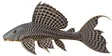
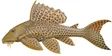
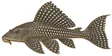
Amazon Sailfin Catfish field guide illustration

About Amazon Sailfin Catfish

Pterygoplichthys pardalis, the Amazon sailfin catfish, is a freshwater tropical fish in the armored catfish family (Loricariidae). It is one of a number of species commonly referred to as the common pleco or "leopard pleco" by aquarists.

Description

This species will grow to a maximum length of 43 centimetres (17 in) SL and reach a weight of 310 g.

It is sometimes confused with the Hypostomus plecostomus (another armored catfish known as the "common plecostomus"). The two species can be distinguished by their number of dorsal rays. P. pardalis has 11–13, while the H. plecostomus has only 5–8 dorsal rays. It is also commonly misindentified as P. disjunctivus and can be differentiated by its spotted patterning.

There is an albino color variation of this species, usually referred to as an "Albino Plecostomus". The amelanistic form may also be sold as the "chocolate pleco".

Distribution and habitat

The species is native to the Amazon River Basin of Brazil and Peru, preferring pH ranges of 7.0–7.5. It is a facultative air breather; although normally a bottom-dwelling fish, it has the ability to breathe air from the surface of the water during dry periods or when dissolved oxygen is too low. The Amazon sailfin catfish has been introduced to a number of countries outside its native range. It is recorded in the Marikina River in the Philippines and known as the "janitor fish", where it has become a local pest and sold in bulk, in efforts to eliminate the fish. In the United States, invasive populations of sailfin catfishes like the Amazon sailfin catfish have been observed to be ecologically detrimental, as they disrupt aquatic food chains, decrease the abundance of native aquatic species, and degrade aquatic plants or banks of waterbodies through burrowing and tunneling.

Invasive species

In Malaysia, the fish was brought into the country in the 1970s for fish hobbyists. It is believed that they are dumped into Malaysian rivers and lakes by aquarium owners when it is too big for their fish tanks.

Article text: Wikipedia contributors, Pterygoplichthys pardalis (source revision). Licensed under CC BY-SA 4.0. Retrieved 2026-10-11.
Diet and feeding

The FishTraits compilation records these diet categories for this species: algae or phytoplankton; detritus or unidentified plant material. These are broad categories, not a claim that every individual consumes every example in a category.

Habitat preferences

The source records associations with muck, clay or silt, vegetation. An association indicates reported use, rather than an exclusive requirement.

Size and recorded longevity

FishTraits reports a maximum total length of 42 centimetres. Some entries use an estimated asymptotic length; this value should not be treated as a certified record catch.

Identification and appearance

Pterygoplichthys and other suckermouth armored catfishes (family Loricariidae) can be distinguished from native North American catfishes (Ictaluridae) by the presence of flexible bony plates (absent in ictalurids) and a ventral suctorial mouth (terminal in ictalurids). Pterygoplichthys is often confused with Hypostomus: these genera can be distinguished by the number of dorsal fin rays (7-8 in Hypostomus vs. 9-14 in Pterygoplichthys).

Native range

Tropical America. Amazon River basin.

Introduction history

Probable aquarium release.

Ecological impacts

Because it grazes and removes attached algae, and also feeds on benthic organisms and detritous, this introduced catfish may be having a significant impact on the aquatic food base and, therefore, negatively effecting native invertebrate and vertebrate species (Nico, personal observations).

Pterygoplichthys paradalis was the most important dietary item for Common Snook (Centropomus undecimalis) in southeastern Mexico, where they were also consumed by Tarpon (Megalops atlanticus), Cormorants (Phalacrocorax brasilianus), and Osprey (Pandion haliaetus) (Toro-Ramírez 2014).

Range

Where it lives

Share of 100 GBIF observation records with a state location, across 5 states.
0%
92%
Share of 100 GBIF observation records with a state location, across 5 states.

Habitat

Water and movement

Water
WoRMS records this species in fresh water.
USGS NAS habitat
Freshwater
US status
Exotic — the USGS Nonindigenous Aquatic Species database lists it as introduced from outside North America.

Classification

Taxonomy

Kingdom
Animalia
Phylum
Chordata
Superclass
Actinopterygii
Class
Teleostei
Order
Siluriformes
Genus
Pterygoplichthys
Species
Pterygoplichthys pardalis
ITIS TSN
680353
WoRMS AphiaID
1021550
GBIF key
2339971

Common questions about Amazon Sailfin Catfish

What is the scientific name of Amazon Sailfin Catfish?
The scientific name is Pterygoplichthys pardalis, in the family Loricariidae. Classification follows ITIS.
Does Amazon Sailfin Catfish live in fresh water or salt water?
WoRMS records this species in fresh water.
Where has Amazon Sailfin Catfish been recorded in the United States?
GBIF has observations in 5 states, with the most records in Florida, North Carolina, Alabama. The map shows observation records, which do not establish the complete natural range.

Closest relatives

Other Pterygoplichthys species

Same family

More Loricariidae