Brook Silverside

Labidesthes sicculus

Atherinopsidae · freshwater water fish

6 minute read · Species guide

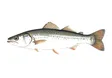
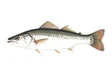
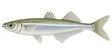
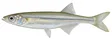
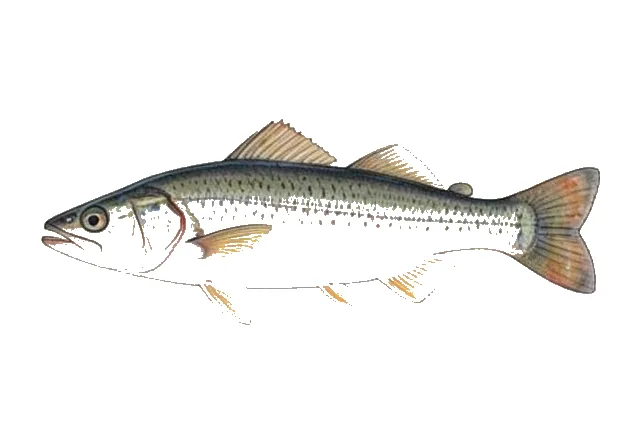
Brook Silverside field guide illustration

About Brook Silverside

Labidesthes sicculus, also known as the brook silverside, is a North American species of Neotropical silverside. The brook silverside lives in slow moving rivers and lakes from the Great Lakes to the Mississippi Basin and Gulf Coastal Plains. The brook silverside survives best in clear water with aquatic vegetation. L. sicculus feeds on a diet of copepods, insect larvae, and winged insects. The spawning season of the brook silverside occurs during the spring and early summer. The survival of freshwater fishes such as the brook silverside is increasingly threatened. In order to ensure survival of the brook silverside, turbidity of natural habitats should be monitored. Adults typically reach a length of about 3 inches (7.6 cm), with a maximum recorded length of approximately 5.1 inches (13 cm).

Geographic distribution

The distribution of brook silverside populations range from the Great Lakes southward through the Mississippi Basin and Gulf Coastal Plains (including 27 U.S. states and parts of Canada). It is native to the majority of this distribution, but has also been stocked outside of its natural range as forage food for sport fishes. The brook silverside occupies freshwater lakes, ponds, quiet pools and small rivers. The environment ranges from cool to warm water with variability in levels of gradient and vegetation. Consistently, however, the brook silverside prefers clear water with low substrate concentrations. The brook silverside is vulnerable to turbid waters. In Tennessee, brook silverside populations were shown to have decreased shortly after the construction of the Tennessee-Tombigbee Waterway. Populations likely declined because of introduced competition.

Ecology

The brook silverside is on the lower end of the food chain, and is preyed on by many larger fish. The diet of the brook silverside consists mostly of zooplankton. They are highly specialized feeders with cladocerans comprising 80% of their diet, (40%) small flying insects, and (20%) midge larvae. Their diet varies with life stages and seasons. At a younger age, the brook silverside preys mostly on smaller fish. Their diet shifts to immature insects later. During winter, the brook silverside eats mostly planktonic crustaceans. Because of both intentional and unintentional species introduction, the brook silverside must compete for food sources. Specifically, the brook silverside has been forced to compete with the non-native Menidia audens, which was introduced by waterway construction. This forced competition of resources has led to a decrease in brook silverside populations.

Life history

The brook silverside breeds in the summer from late May to mid-August. Their life span is only one year. During the first year, they have rapid growth, growing up to one millimeter per day. Brook silversides quickly reach a maximum size of approximately eight centimeters. They reach sexual maturity by the first summer in order to reproduce. Some studies report that brook silversides reproduce by internal fertilization, although this has not been entirely confirmed. When the eggs are produced, they have an attached filament, which allows for the eggs to be deposited on logs, plants and rocks. Temperature does not affect the sex of fish. After the eggs hatch, they immediately swim away from the shore into deeper water, but still stay just under the surface. They congregate in large schools. The brook silverside migrates throughout its life cycle. No human-induced changes are reported as affecting the life history. Human-induced changes are reported as more strongly affecting populations rather than behaviors.

Current management

Human intervention through species introduction, habitat alteration, pollution, and construction are causing the decline of the brook silverside and other freshwater fishes. Freshwater fishes account for the majority of extinctions in ray-finned fishes. To stabilize and increase populations, no more dams or waterways should be built. Additionally, pollution must be stopped. Agricultural runoff creates turbid waters, which the brook silverside cannot thrive in. Stream sampling occurs through organizations such as USFWS and TVA (locally). This allows for populations to be monitored and stream chemistry to be controlled. Over-fishing and hybridization aren't causing brook silverside populations to decline. Invasive species and habitat destruction have the greatest impact on population decline. Areas are being reserved for the preservation of endemic fish, but more must still be done.

Article text: Wikipedia contributors, Brook silverside (source revision). Licensed under CC BY-SA 4.0. Retrieved 2026-10-11.
Diet and feeding

The FishTraits compilation records these diet categories for this species: invertebrates or larval fish. These are broad categories, not a claim that every individual consumes every example in a category.

Reported feeding positions include surface or water-column feeding. The compilation combines published observations; diets can vary with age, locality, and available food.

Habitat preferences

Reported habitat associations include medium to large rivers, streams and small rivers, creeks, still-water habitats.

The source records associations with muck, clay or silt, sand, gravel, cobble, boulders, bedrock, vegetation, organic debris. An association indicates reported use, rather than an exclusive requirement.

Reproduction and parental care

The compilation reports a representative maturity age of 1 years. Its maturity field summarizes mean, median, or modal estimates, usually for females; male estimates can be used when female data are unavailable. It is not a fixed age at which every fish first breeds.

Recorded spawning months are Jun, Jul, Aug for the source’s reporting region (NC). This is a regional calendar, not a range-wide schedule.

The reproductive-guild classification includes spawning on open substrates without guarding the brood.

Size and recorded longevity

FishTraits reports a maximum total length of 13 centimetres. Some entries use an estimated asymptotic length; this value should not be treated as a certified record catch.

Recorded longevity in the compilation is 2 years. Wild observations were preferred, but captive records were accepted where wild records were unavailable, and unspecified records were assumed wild. The value is not a guaranteed wild lifespan or an aquarium life expectancy.

Identification and appearance

Brook Silverside can be distinguished from Golden Silverside/Stout Silverside (Labidesthes vanhyningi) by the ratio of thoracic length to abdominal length (>2 in L. sicculus vs. <2 in L. vanhyningi) and the shape of the midlateral stripe (tapered in front of the first dorsal fin in L. sicculus vs. not tapering in L. vanhyningi) (Werneke and Armbruster 2015)

Native range

Native to Lake Erie and Lake America (and their tributaries) and the St. Lawrence and Ottawa rivers. Also native to Lake Michigan tributaries (Hocutt and Wiley 1986). Type specimen for the species was collected in 1865 near Grosse Ile in the Detroit River, Michigan (Cahn 1927).

Habitat and ecology

Brook Silverside is an annual species that mature at age 1 and usually die before reaching 18 months (Marsden et al. 2000). They spawn in spring and early summer in and around vegetation, esp. Scirpus and Potamogeton when water temperatures reach 20ºC and spawning climaxes at 22.4ºC (Cahn 1927). Females produce 400 to 700 eggs, which are orange and attached by a ~2.0 cm long adhesive filament – hatching in 8-9 days (Becker 1983). Juveniles exhibit extremely rapid growth with 70-80% of total length achieved within the first year prior to winter (Scott and Crossman 1973; Becker 1983). Liifespans rarely exceed 2 years as individuals die after spawning.

It is a specialized feeder, preying on cladocera, small flying insects, and Chaoborus larvae. Their diet is dominated by terrestrial insects (Johnson et al. 2017). This species feeds with a snapping action, often jumping to capture flying insects (Scott and Crossman 1998). Brook Silverside are consumed by a variety of organisms, including waterfowl, turtles, water snakes, crayfish, minks, and fish (Becker 1983) and may be an important forage fish for Smallmouth Bass (Micropterus dolomieu), Cisco (Coregonus artedi) and Gar (Lepisosteus osseus) (Cahn 1927).

Introduction history

Page and Burr (1991) reported that the species had been introduced, usually into impoundments, as forage for sport fishes. Apparently, therefore, most introductions have been intentional (e.g., Jenkins and Burkhead 1994, and references cited therein). The species was accidentally introduced in Nebraska at the Sutherland cooling pond in July 1979 (Rowe 1992).

Introductions in New York and Vermont are a result of canal connections. Lake Champlain is connected to the Hudson and Mohawk rivers via a canal (Marsden et al. 2000).

Range

Where it lives

Share of 18,150 GBIF observation records with a state location, across 27 states. The orange dots are USGS stream-survey sites where this species was caught.
0%
21.9%
Share of 18,150 GBIF observation records with a state location, across 27 states. The orange dots are USGS stream-survey sites where this species was caught.

A blank area on the dot layer usually means nobody sampled there, not that the fish is absent. Turn on “every survey site” to see where the survey looked.

The USGS stream survey caught it at 1,553 of its sites, in 27 states. That survey and the GBIF records are two different counts of two different things, so the site keeps them apart.

Habitat

Water and movement

Water
WoRMS records this species in fresh water.
USGS NAS habitat
Freshwater
US status
Native transplant — native to part of the United States, moved to other waters inside it.
Migration
Not migratory

Classification

Taxonomy

Kingdom
Animalia
Phylum
Chordata
Superclass
Actinopterygii
Class
Teleostei
Order
Atheriniformes
Genus
Labidesthes
Species
Labidesthes sicculus
ITIS TSN
166016
WoRMS AphiaID
422550
GBIF key
2412271
Outside the US
ITIS also files it in Canada.

Common questions about Brook Silverside

What is the scientific name of Brook Silverside?
The scientific name is Labidesthes sicculus, in the family Atherinopsidae. Classification follows ITIS.
Does Brook Silverside live in fresh water or salt water?
WoRMS records this species in fresh water.
Where has Brook Silverside been recorded in the United States?
GBIF has observations in 27 states, with the most records in Florida, Oklahoma, Texas. The map shows observation records, which do not establish the complete natural range.

Same family

More Atherinopsidae