Gray Triggerfish

Balistes capriscus

Balistidae · saltwater water fish

11 minute read · Species guide

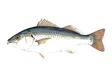
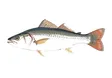
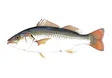
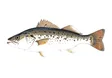
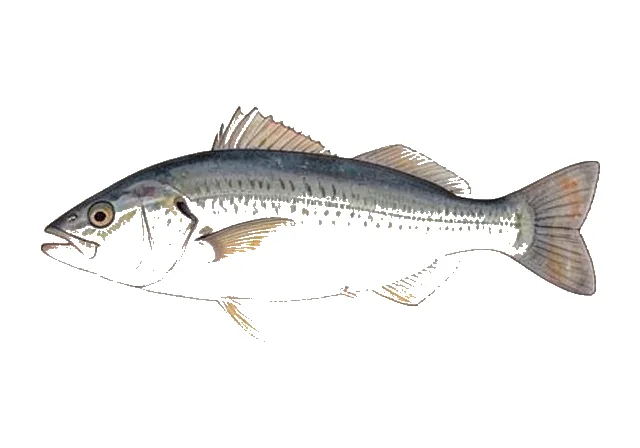
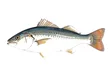
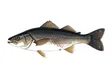
Gray Triggerfish field guide illustration

About Gray Triggerfish

The grey triggerfish (Balistes capriscus), or gray triggerfish, is a species of ray-finned fish in the triggerfish family Balistidae. The species is native to shallow parts of the western Atlantic from Nova Scotia to Argentina and also the eastern Atlantic, the Mediterranean Sea, and waters off Angola on the west coast of Africa.

In its appearance and habits, the grey triggerfish is a typical member of the genus Balistes except for its drab, uniformly grey coloration. It is a relatively small fish, usually less than 2.3 kg (5.1 lb) in weight. The Grey triggerfish is fished recreationally and, despite its tough skin, is an excellent food-fish. The species is classified as 'vulnerable' by the IUCN Red List.

Taxonomy

The Grey triggerfish was first formally described in 1789 by Johann Friedrich Gmelin with its type locality given as the Western North Atlantic, the Indian Ocean and the Mediterranean Sea. This species is classified in the genus Balistes which is the type genus of the family Balistidae, a family classified in the suborder Balistoidei in the order Tetraodontiformes.

Etymology

The grey triggerfish is classified in the genus Balistes, a name which refers to the first spine of the dorsal fin being locked in place by the erection of the shorter second trigger spine, and unlocked by depressing the second spine. Balistes is taken directly from the Italian pesca ballista, the "crossbow fish". Ballista originally being a machine for throwing arrows. The specific name capriscus is Latin for a "small goat", an allusion Gmelin did not explain, and it is likely to be a mistranslation of its Greek name dating to Aristotle, kápros, which means "boar"or kaprískos. its diminutive, an allusion to its sharp, powerful and perhaps also to a boar-like ferocity, as described by the Roman author and naturalist Claudius Aelianus in De Natura Animalium,"they fight even with fish of greater bulk and with the most skilled fishermen".

Distribution and habitat

The grey triggerfish is principally a fish of shallow waters in the western Atlantic Ocean. Its native range extends from Nova Scotia to the Caribbean Sea, the Gulf of Mexico and Bermuda, and southwards to Argentina. It is typically found over hard bottoms on reefs and rocky areas, in lagoons and in bays, at depths down to about 55 m (180 ft). It is also found on the other side of the Atlantic, around the British Isles, in the Mediterranean Sea and off the coast of Angola. It may have crossed the Atlantic as a result of the movement of water in the Gulf Stream and breeds in the Mediterranean.

Once considered to be an uncommon visitor to northern European seas, an increase in records around the Cornish coast, may indicate it is now breeding there; in addition, it has been found in other areas along the coast of Great Britain in recent years, suggesting that its range is continuing to expand northwards, with one caught as far north as the island of Tiree in the Inner Hebrides, Scotland.

Description

The grey triggerfish is a medium-sized fish that can grow to 60 cm (24 in), but a more common length is 44 cm (17 in). The small beak-like mouth at the tip of the snout has fleshy lips. The eyes are set far back near the top of the head. The body is laterally compressed and deep-bodied with a tough, leathery skin. The front dorsal fin has three spines, the first being very strong and much longer than the other two. The second dorsal fin has 26 to 29 soft rays and is much the same size and shape as the anal fin directly below it which has no spines and 23 to 26 soft rays. The pectoral fins are small and rounded. The outer rays of the caudal fin are elongated in larger individuals. The scales on the head and front half of the body are large while those on the hind half are smaller and smooth.

This fish is predominantly pale grey, greenish-grey or yellowish-brown. The body has three indistinct broad dark bars and there is a pale streak on the chin. The upper part of the orbit of the eye is blue and there are some small blue spots and lines on the dorsal fins and upper parts of the body, and sometimes white dots and irregular lines on the lower parts of the body. Both the second dorsal and the anal fin present a somewhat marbled appearance. The body colour fades a little as the animal gets older: juveniles are more colourful.

Behaviour

Locomotion in the grey triggerfish is by means of undulations of the dorsal fins. If threatened, the fish can work its way into a protective crevice and wedge itself in place by erecting its front dorsal spine. It is difficult to dislodge from this position. The second spine is connected to the first and when it is depressed, it triggers the unlocking of the first spine.

The grey triggerfish is a demersal species and feeds on bottom-dwelling invertebrates such as shrimps, crabs, molluscs, sea urchins, sand dollars, starfish and sea cucumbers. It has strong teeth specialised for making holes in hard-shelled prey. An interesting feeding behaviour has been observed, in which the fish positions itself vertically above a sandy seabed and puffs a stream of water out of its mouth. This disturbs the substrate and may reveal something edible. Further puffs expose more, and the prey item is gripped with the fish's sharp teeth and removed from the seabed. If it is a sand dollar, the fish drops it and picks it up again several times until the prey lands upside down. The fish then adopts its vertical stance once more and attacks the middle with closed jaws, crushing the soft central area. It then scoops out and devours the flesh.

Males develop a charcoal grey colouration and are highly territorial during the breeding season, which commences in summer when the water temperature reaches about 21 °C (70 °F). The males prepare up to a dozen nests in hollows blown out of sandy seabed and then patrol the area, driving unwanted fish away. The females roam around inspecting the nest sites. When a female is ready to spawn, both male and female enter a nest and tightly circle round each other while she lays large numbers of minute eggs and he fertilises them. The female stays in the nest, guarding the eggs and blowing and fanning them. The male defends his territory, which may contain other nests with females guarding their eggs. In this way, the male exhibits harem behaviour. Wrasses and red snappers sometimes feed on the eggs which, if they survive that long, hatch after about fifty hours. The fish larvae migrate up towards the surface of the water where they often become part of the community depending on floating sargassum weed. There they feed on algae, barnacles, hydroids and polychaete worms. In the autumn, when they reach about 15 cm (6 in), the juvenile fish leave the sargassum and sink down to the sea bed.

Recreational fishing

The grey triggerfish is fished recreationally around Florida and elsewhere. It is known as a notorious bait stealer and is found over hard bottom in 20 to 40 m (66 to 131 ft) depths off the Atlantic Coast of Florida, often in association with black sea bass and red snapper. Because of its bony mouth it needs a small sharp hook which is usually baited with squid or cut bait. The flesh is of high quality but the consumption of this fish has been linked to isolated cases of ciguatera poisoning.

Article text: Wikipedia contributors, Grey triggerfish (source revision). Licensed under CC BY-SA 4.0. Retrieved 2026-10-11.
NOAA Fisheries

Life history and status

NOAA management region
Southeast

About the species

U.S. wild-caught gray triggerfish is a smart seafood choice because it is sustainably managed and responsibly harvested under U.S. regulations.

Population status

There are three stocks of gray triggerfish: the Gulf of America stock, the South Atlantic stock, and a stock contained in the Puerto Rico Triggerfishes Complex. According to the most recent stock assessments: The Gulf of America stock is not overfished but still rebuilding to target levels (2015 stock assessment), and not subject to overfishing based on 2024 catch data. Summary stock assessment information can be found on Stock SMART . Scientists conducted an exploratory assessment of South Atlantic gray triggerfish in 2001 and determined that the stock was not subject to overfishing, but overfished status is unknown. A formal stock assessment has not been conducted. The population status of the Puerto Rico Triggerfishes Complex, which includes gray triggerfish, is unknown. The complex has not been assessed, but according to 2023 catch data, the complex is not subject to overfishing.

Scientists from NOAA’s Southeast Fisheries Science Center monitor the abundance of these populations. Scientists, managers, and stakeholders assess the status of these stocks through the Southeast Data, Assessment, and Review (SEDAR) process.

Appearance

  • Adults are primarily olive-gray, have blue spots and lines on the upper body and dorsal (back) fin, and the upper rims of their eyes are blue.
  • Adults have the ability to change color, particularly during the spawning season (April to August). Males turn a dark charcoal gray, while nesting females display a contrasting white and black color pattern.
  • Juveniles are yellowish with small violet dots and can have large, irregular dark patches on the body and fins.
  • Juveniles also have saddle markings and light spots on their dorsal (back) and anal fins.
  • Triggerfish get their name from spines on the dorsal (back) fins that can be used as a predator defense and for anchoring. The first spine is large, and when erect it remains so until the fish deflexes the smaller second spine, “triggering” the first. When a triggerfish is threatened it will dive into a tight crevice and anchor itself into place by locking its erect spine.

Biology

  • Triggerfish can grow to be up to 13 pounds, 28 inches fork length (length from the tip of the snout to the center of the fork of the tail), and 16 years old.
  • Males are larger than females.
  • Triggerfish become sexually mature at approximately 2 years old.
  • Spawning occurs from April to August. Male gray triggerfish establish territories, build nests in the sand, and entice females into the nest to spawn. The male and female tightly circle one another in the nest, rapidly changing color, and the female deposits eggs in the nest shortly afterward.
  • Females deposit an average of 772,415 eggs. After fertilization females aerate the eggs by fanning and blowing on them.
  • One male can defend up to three active nests on one reef. An active nest is defined as one female on the nest guarding and aerating the eggs. Females also guard the nest from predators, such as wrasses, groupers, and red snappers.
  • Eggs hatch within 24 to 48 hours and the larvae travel to the surface, where they often live among mats of planktonic (open ocean) Sargassum, a floating brown algae.
  • Larvae and juveniles spend 4 to 7 months in the planktonic environment before they move to the ocean bottom.
  • Adults primarily eat benthic invertebrates including crabs, sea urchins, shrimp, sand dollars, lobsters, and mollusks. They have a small mouth with a strong jaw and specialized teeth used to crush and chisel holes in their hard-shelled prey. Gray triggerfish sometimes direct a stream of water over sandy ocean bottom habitat to expose sand dollars to eat. Juvenile gray triggerfish feed on hydroids, barnacles, and polychaetes.
  • Amberjack, grouper, and sharks prey upon adult gray triggerfish; tuna, dolphinfish, marlin, sailfish, and sharks prey upon juvenile gray triggerfish.

Where they live

  • Adults live on hard ocean bottoms, reefs, ledges, and artificial reefs at depths of 80 to 300 feet, either alone or in small groups.
  • Larvae and juveniles drift up to the surface and develop within the planktonic environment (open ocean), and often live among mats of planktonic Sargassum (a floating brown algae) before they move to the bottom.
  • Gray triggerfish are found in the western Atlantic Ocean from Nova Scotia south to Argentina, including Bermuda and the Gulf of America.

Fishery management

NOAA Fisheries and the South Atlantic , Gulf , and the Caribbean Fishery Management Councils manage the gray triggerfish fishery.

In the South Atlantic, managed under the Snapper Grouper Fishery Management Plan : Recreational and commercial fishery minimum length limits in federal waters off the east coast of Florida. Recreational bag limits. Annual catch limits and accountability measures, with automatic triggers to prevent overfishing if the catch limit is exceeded, including shortened future fishing season (recreational) or reduced future catch limits (commercial). Requirements to carry NOAA Fisheries approved sea turtle release gear and follow smalltooth sawfish release protocol to reduce bycatch impacts to protected species.

In the Gulf of America, managed under the Reef Fish of the Gulf of America Fishery Management Plan : Recreational and commercial minimum size limits, daily bag limits, and seasonal closures to promote spawning and slow the rate of harvest. Annual catch limits with automatic triggers to prevent overfishing if catch limit is exceeded, including shortened future fishing season (recreational) or reduced future catch limits (commercial). Requirements to carry NOAA Fisheries approved sea turtle release gear and follow smalltooth sawfish release protocol to reduce bycatch impacts to protected species. A rebuilding plan to rebuild the stock to the target population level is in place with a target date of 2026.

In the U.S. Caribbean, managed under the Puerto Rico Fishery Management Plan : Managed together with queen triggerfish and ocean triggerfish in the Triggerfishes complex. Recreational and commercial annual catch limits for the Triggerfishes complex. Included in the recreational bag limit for select reef fish: 5 fish per person/day, of which no more than 1 may be surgeonfish, or, if 3 or more persons are aboard, 15 fish total per vessel/day, of which no more than 4 may be surgeonfish..

Range

Where it lives

Share of 19,915 GBIF observation records with a state location, across 18 states.
0%
97.2%
Share of 19,915 GBIF observation records with a state location, across 18 states.

Habitat

Water and movement

Water
WoRMS records this species in the sea.

Classification

Taxonomy

Kingdom
Animalia
Phylum
Chordata
Superclass
Actinopterygii
Class
Teleostei
Order
Tetraodontiformes
Genus
Balistes
Species
Balistes capriscus
ITIS TSN
173138
WoRMS AphiaID
154721
GBIF key
2407107
Outside the US
ITIS also files it in Canada.

Common questions about Gray Triggerfish

What is the scientific name of Gray Triggerfish?
The scientific name is Balistes capriscus, in the family Balistidae. Classification follows ITIS.
Does Gray Triggerfish live in fresh water or salt water?
WoRMS records this species in the sea.
Where has Gray Triggerfish been recorded in the United States?
GBIF has observations in 18 states, with the most records in Florida, North Carolina, Texas. The map shows observation records, which do not establish the complete natural range.

Closest relatives

Other Balistes species

Same family

More Balistidae