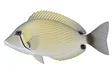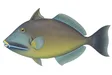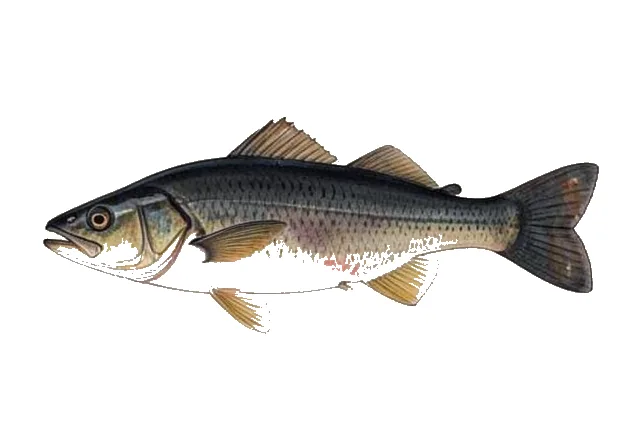
These are not to be confused with their cousins, the Indian triggerfish or black-finned triggerfish (Melichthys indicus), which are often mistaken as being black triggerfish within the aquarium trade. The Indian triggerfish has never been found near Hawaii, but bears a striking resemblance to the black triggerfish because of the similar shape and coloration.
Distribution and habitat
Circumtropical. Hawaii, up through Polynesia, westward to the East Indies and across the Indian Ocean. The black triggerfish is also located around the southern coast of Africa.
Although, the black triggerfish is commonly found in the Indo Pacific and Red Sea.
This species is found in open waters, shallows, and exposed reefs, 5–35 metres (15–115 feet) Seems to prefer inland/shores in the Ascension Island region where they are strangely prolific.
Size
On average, 12 inches, although it can grow to be up to 18 inches.
Diet
Omnivorous. Feeds upon small fish and squid. Shrimp, zooplankton, algae, and other marine plant life.
A study conducted in the Fernando de Noronha Archipelago of the southwest Atlantic Ocean, revealed the feces and vomit of Spinner dolphins (Stenella longirostris) formed part of the diet of twelve species of reef fish from seven different families. The most prolific consumer was the black male, which could even discern the postures dolphins assumed prior to voiding and positioned themselves for effective feeding. All these offal eating fish species are recorded plankton eaters and it is considered that this type of feeding may represent a change in its usual diet, i.e. drifting plankton.
Additional field notes
Black triggerfish is also known as black durgon. Its dark, sturdy body is outlined by pale lines near the bases of the soft dorsal and anal fins.
Sources: Melichthys niger species account
Field identification notes
The body is an elongated oval with thick skin and a small mouth containing powerful teeth. The first dorsal spine can lock upright. Look for blue-white lines at the bases of the dorsal and anal fins and finer blue markings around the eye. The tail is concave rather than square.
Sources: Melichthys niger species account
Habitat and range notes
Rocky reefs and coral areas are its characteristic setting. The Smithsonian describes a circumtropical distribution; its regional Atlantic account extends from Bermuda to Brazil. A broad global range is a species-level summary and should not be confused with continuous occurrence along every shoreline.
Sources: Melichthys niger species account
Feeding and life-history notes
The source lists several feeding categories, including algae, plankton, and small animals. This is broader than a diet limited to one kind of hard-shelled prey. Its maximum size is listed as 50 cm in the Smithsonian account. Dark color alone is insufficient: the pale fin-base lines and body structure are useful checks against other triggerfishes.
Sources: Melichthys niger species account
Guide sources
Research reviewed 2026-10-17.
- Melichthys niger species account — Smithsonian Tropical Research Institute
Article text: Wikipedia contributors, Black triggerfish (source revision). Licensed under CC BY-SA 4.0. Retrieved 2026-10-11.