Distribution
This species is native to the Indian and Pacific oceans, from East Africa to Hawaii, Line Islands, Marquesas Islands and Tuamotus, from Ryukyu to Lord Howe Island, Rapa Iti and French Polynesia.
Habitat
These tropical benthopelagic goatfishes can be found mainly in island waters and occur on coral and rocky seaward reefs, over sandy and coral bottoms and in shallow lagoons, to a depth of 40–120 metres (130–390 ft).
Description
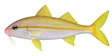
Parupeneus pleurostigma can reach a length of 20–33 centimetres (7.9–13.0 in). They have nine dorsal soft rays, seven anal soft ray and sixteen pectoral rays. Snout is slightly convex and the margin of caudal-fin lobes is straight to slightly convex.
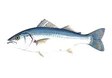
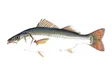
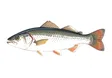
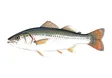
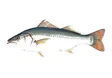
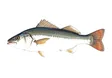
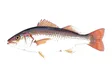
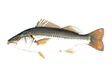
Body color range from pinkish to yellowish gray, with a broad black spot on lateral line, sometimes followed by a large pinkish spot. A black band is present below the basal dorsal fin and blue spots on the scales above lateral line. The two barbels extending form the chin are pale pink to white.
Biology
These goatfishes are usually solitary. They feed during the day on small fish and invertebrates, as gastropods, crabs, crustaceans (mainly crabs and shrimps), polychaetes and worms, foraminiferans, brittle stars and heart urchins, found by means of the two barbels.
Additional field notes
Blackspot goatfish forage across a varied mosaic of reef and soft-bottom habitats.
Habitat and daily activity
FishBase describes this mainly island-associated goatfish as usually solitary. It uses shallow lagoon and seaward reefs, but is also recorded in seagrass beds and over sand, rubble, coral, and rock. Its presence over a reef does not mean that all of its feeding occurs on living coral. The species is active as a bottom-animal feeder during daylight.
Its prey list is notably broad: crabs, shrimp, marine worms, heart urchins, snails, bivalves, brittle stars, foraminiferans, and fish are all included in the species account. This is a diverse animal diet drawn from the bottom environment.
Details of the color pattern
The dark flank spot lies on the lateral line below the rear portion of the first dorsal fin. FishBase describes a pale pink or white patch immediately behind it. Blue markings can include a spot on individual scales and short lines radiating from the eye; some blue spots can be difficult to see. The chin barbels are pale pink to white. The base of the second dorsal fin may carry a broad dark band or a large spot, so identification should consider the complete pattern rather than the flank spot alone.
Article text: Wikipedia contributors, Parupeneus pleurostigma (source revision). Licensed under CC BY-SA 4.0. Retrieved 2026-10-11.