American Angler

Lophius americanus

Lophiidae · saltwater water fish

12 minute read · Species guide

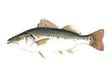
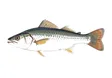
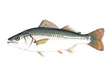
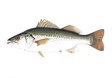
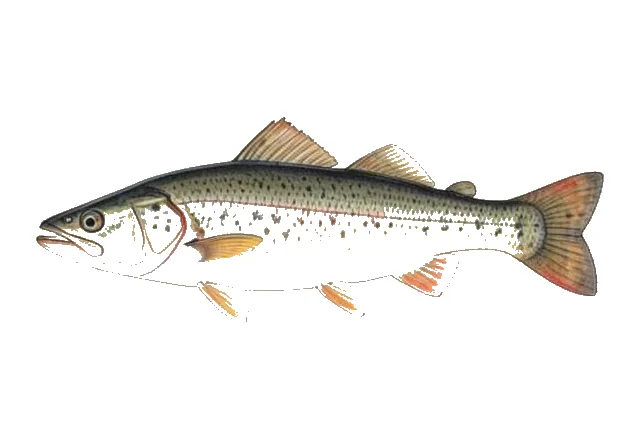
American Angler field guide illustration

About American Angler

Lophius americanus is a goosefish in the family Lophiidae, also called all-mouth, American anglerfish, American monkfish, bellows-fish, devil-fish, headfish, molligut, satchel-mouth, or wide-gape. It is native to the eastern coast of North America.

Description

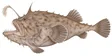
The American anglerfish is unique in its appearance and has no relatives with which it can be confused in the areas where it is caught. A fish of lesser importance than other food fish in the region, such as cod, its various names suggest its unusual appearance - a very large mouth, more than twice the width of the tail, with several spines and strong teeth, enabling it to snare prey larger than itself. The body is flattened dorsoventrally to allow it to hide on the sea floor. The front of the head carries erectile spines, the primary of which has a flattened end to resemble a small organism or piece of algae. The pectoral fins are like wide fans behind the head, and the pelvic fins are like small hands below the head.

The American anglerfish can grow to a length of 140 cm (55 in), but 100 cm (39 in) is a more usual size. The greatest recorded weight is 22.6 kg (50 lb) and the greatest recorded age is 30 years.

Distribution and habitat

The American anglerfish is found in the western Atlantic from Newfoundland and Quebec south to northern Florida, but is commoner in the more northerly parts of its range, north of Cape Hatteras. It is a demersal fish living close to the seabed at depths down to about 2,000 feet (610 m). It is found on sand bottoms, gravel, shell fragments, mud and clay.

Feeding

The American anglerfish is an ambush predator. It spends most of its time on the seabed partly covered in sediment waiting for suitable prey to pass. It can swim slowly or "walk" with the help of its pectoral fins. Its diet normally consists of fin and ray fish, squids, cuttlefish and occasionally carrion. After storms it has been reported on the sea surface where it has been recorded as catching seabirds. Cannibalism is known to occur among American anglerfish. Incidences of this behavior are more common among larger specimens, and particularly among actively reproducing females.

Breeding and lifecycle

Spawning takes place in the summer with a peak in May and June. The eggs are large and are believed to be unique among fish in being attached to a floating mucus veil. The number of eggs in a veil can range from 1 to 3 million and the veil drifts on the surface of the sea. The eggs hatch after 6 to 100 days, depending on the sea temperature, and remain protected within the veil for a few days, absorbing nutrients from their yolk sacs. They then become pelagic and join other fish larvae in the "ichthyoplankton community". The larvae feed on zooplankton and look quite different from the adult fish, being laterally compressed and having long dorsal and pectoral fin rays. When about 7 centimetres (2.8 in) long they become juveniles, changing their appearance over a period of several weeks into the adult shape and starting to live on the seabed. They grow fast in their first year and more slowly thereafter.

Food use

The flesh of the anglerfish is located primarily in the body, less so in the "shoulders" and cheeks. The flesh is very white and moist, becoming quite firm when cooked. It is served both in soups and grilled, and is similar in texture to the flesh of crustaceans. Fillets are thick and boneless resembling crab or lobster tail. Connoisseurs believe the liver is also excellent; in Japan, it is consumed as Ankimo. The fish is covered with a soft, scaleless, elastic skin, under which another thin edible membrane covers the flesh. Though much less so than in cod, one can sometimes find parasitic worms in the flesh of anglerfish, whose opacity can make them easier to find. Worms are usually found between the skin and outer portion of the flesh ranging in size from a few millimeters to over one inch.

Article text: Wikipedia contributors, Lophius americanus (source revision). Licensed under CC BY-SA 4.0. Retrieved 2026-10-11.
NOAA Fisheries

Life history and status

NOAA management region
New England/Mid-Atlantic, Southeast

About the species

The commercial monkfish fishery in the U.S. operates from Maine to North Carolina out to the continental margin. Trawl gear is primarily used in northern waters, and gillnet gear in southern waters. Because it is common for monkfish to be caught in conjunction with groundfish, you will see a lot of the information on this site also relates to the northeast multispecies (groundfish) fishery. The monkfish fishery is managed using a days-at-sea and trip limit management system. There is no known directed recreational fishery for monkfish. The market for monkfish is for human consumption. U.S. wild-caught monkfish is a smart seafood choice because it is sustainably managed and responsibly harvested under U.S. regulations. Implementing regulations are found at 50 CFR part 648 subpart F .

Population status

There are two stocks of monkfish: Gulf of Maine/Northern Georges Bank and Southern Georges Bank/Mid-Atlantic: The Gulf of Maine/Northern Georges Bank stock does not have a stock assessment that provides information about the overfishing and overfished status. A 2022 index-based assessment method is currently used for catch advice, but does not support stock status determinations. This information can be found on Stock SMART . The Southern Georges Bank/Mid-Atlantic stock does not have a stock assessment that provides information about the overfishing and overfished status. A 2022 index-based assessment method is currently used for catch advice, but does not support stock status determinations. This information can be found on Stock SMART .

Appearance

  • Monkfish have mottled dark brown to olive-green skin on top and whitish skin underneath.
  • They are described as tadpole-like in appearance, with a body that is mostly a broad head with a large mouth and a narrow, tapering body.

Biology

  • Males and females are able to reproduce when they reach about 14 inches and 16 inches long, respectively.
  • Monkfish spawn from February to October.
  • Females release large egg veils that can contain more than 1 million eggs.
  • These egg veils float near the surface along with the prevailing currents for 1 to 3 weeks (depending on temperature) until the veil disintegrates and the larvae hatch.
  • Monkfish migrate seasonally to spawn and feed.
  • They travel by slowly swimming or by using the sturdy base of their pectoral fins to walk.
  • Scientists speculate that their wing-like pectoral fins may be used to ride currents.
  • Monkfish are opportunistic feeders, eating whatever prey is most available at the time.
  • Larvae feed on zooplankton (tiny floating animals). Juveniles mostly eat small fish, shrimp, and squid.
  • Adults mainly eat fish, including other monkfish, but also feed on crustaceans, mollusks, seabirds, and diving ducks.
  • Monkfish ambush their prey—they use a modified spine on their head as a fishing pole and bait to lure small fish toward their mouths.
  • When the prey comes near, the monkfish takes a large gulp, which sucks the prey into its mouth and traps it behind rows of back-pointing teeth.
  • Large monkfish have few predators.
  • Predacious fish such as swordfish, sharks, and thorny skate prey on small monkfish.

Where they live

  • Monkfish live on the ocean floor, typically on sand, mud, and shell habitats .
  • Adults spend most of their time on the bottom, often in a depression or partially covered in sediment. They also spend some time off the bottom, probably riding currents to help with migration.
  • Monkfish are found in the Northwest Atlantic Ocean from the Grand Banks and northern Gulf of St. Lawrence south to Cape Hatteras, North Carolina.
  • They can tolerate a wide range of temperatures and depths, from inshore waters down to nearly 3,000 feet.
  • Monkfish migrate seasonally to spawn and feed.

Fishery management

NOAA Fisheries and the New England and Mid-Atlantic Fishery Management Councils manage the monkfish fishery.

The New England Fishery Management Council has the lead for developing measures in the monkfish fishery management plan.

Managed under the Monkfish Fishery Management Plan : The monkfish fishery in U.S. waters is divided into two management areas north and south of Georges Bank to accommodate differences in monkfish fishing practices. Both areas are managed under the same plan. The Northern Fishery Management Area covers the Gulf of Maine and the northern part of Georges Bank. The Southern Fishery Management Area extends from the southern flank of Georges Bank through the Mid-Atlantic Bight to North Carolina. Management measures include annual catch limits, limited access permits, size limits, landing limits, and measures to reduce bycatch and impacts on habitat.

Fishing regulations

There are currently no recreational possession restrictions for monkfish caught in federal waters. Recreational anglers must still comply with minimum fish size regulations in place for the fishery (Currently for monkfish: 17 inches, whole fish; 11 inches, tail only).

Recreational anglers will need to get a general recreational fishing license either through your state or through NOAA Fisheries to fish recreationally for marine species. Visit our permit office or recreational fishing page for more information.

Commercial gear

Gear Requirements

The monkfish fishery has some gear requirements that vary based on permit category, other types of permits owned, and planned fishing activity. All of the following gear requirements apply while fishing for monkfish under a Monkfish day-at-sea (DAS) unless otherwise noted.

Dredge

Dredge gear is prohibited on a Monkfish DAS. You may not have a dredge onboard your vessel while fishing on a Monkfish DAS trip.

Trawl

The minimum mesh size is 10-inch square or 12-inch diamond mesh throughout the codend for at least 45 continuous meshes forward of the terminus of the net. The minimum mesh size for the remainder of the trawl net is the regulated mesh size specified by the regulated mesh area being fished, as outlined in the Northeast multispecies regulations.

Exception: If you have a Monkfish Category C, D, or H permit and are fishing with trawl gear under both a monkfish and Northeast multispecies DAS, you are subject to the minimum mesh size determined by the Northeast multispecies fishery.

The maximum roller size in the Southern Fishery Management Area (SFMA) is 6 inches in diameter.

Gillnet*

The minimum mesh size is 10-inch diamond mesh. On May 1, 2026 , the minimum mesh size for gillnet gear will be 12-inch diamond mesh.

Exception 1: If you have a Category C, D, or H permit and a Northeast multispecies permit, fishing in the Northern Fishery Management Area (NFMA), and switch from a Northeast multispecies VMS declaration to a monkfish VMS declaration by using the "monkfish option" on your VMS unit, you may continue to use gillnet gear with less than 10-inch diamond mesh. However, you must go by the more restrictive mesh sizes as outlined in the Northeast multispecies regulations.

Exception 2: If you have a Category C, D, or H permit and a Northeast multispecies permit, and you are fishing in the SFMA on a monkfish DAS and a Northeast multispecies DAS, you may fish with standup gillnets as small as 6.5 inches.

If you have a Category A or B permit, you may not fish with, haul, possess, or set more than 160 gillnets at any time.

If you have a Category C, D, F, or H permit and a limited access Northeast multispecies permit, you may not fish with, haul, possess, or set more than 150 gillnets at any time. Note : If you are also fishing on a Northeast multispecies DAS, you must go by the more restrictive net limits of the Northeast multispecies regulated mesh areas ( § 648.80 ).

All gillnets must be tagged with one tag per net, and cannot be longer than 300 ft.

Starting January 1, 2026, vessels fishing on a Monkfish DAS within the New Jersey Atlantic Sturgeon Bycatch Reduction Area using gillnet gear with mesh 10 inches or greater must use low-profile gillnets, year round.

For more information, including maps of these areas, follow the link above or in the More Information box on this page.

* Gillnet and trap/pot fisheries also have Protected Resources requirements to protect marine mammals and other protected species. Please contact the Protected Resources Division at (978) 281-9328 for more information, or visit their web page.

Management

The monkfish fishery is jointly managed by the New England and Mid-Atlantic Fishery Management Councils. NOAA Fisheries is the implementing body for rules and regulations within the fishery. The fishery is managed under a days-at-sea (DAS are the number of days that can be fished per year) management system with corresponding trip limits per DAS.

The range for the monkfish fishery is the EEZ north of the North Carolina/South Carolina border (Maine through North Carolina). However, there are two separate management areas within that range based on different fishing activity/operations between the two areas: the Northern Fishery Management Area (NFMA) and the Southern Fishery Management Area (SFMA). The boundary between the NFMA and the SFMA runs south along the 70° W longitude line from the south-facing shoreline of Cape Cod, MA, to 41° N latitude, then eastward to the U.S.-Canada maritime boundary. There are also two closed areas in the Monkfish FMP. For more information on these areas, visit our Monkfish Fishery Closed Areas page.

Different Requirements in the NMFA

Because the regulations for the SFMA are more restrictive (lower possession limits) than the NFMA, a federally-permitted monkfish vessel fishing exclusively in the NFMA without an operational vessel monitoring system (VMS) on board must obtain a monkfish Letter of Authorization (LOA) from NOAA Fisheries. This LOA is issued for a minimum of 7 days and may be obtained by calling our Permit Office at (978) 282-8438. The non-VMS vessel must also make the proper trip declaration through the interactive voice response (IVR) system in FishOnline . If a vessel has not obtained the LOA and makes a trip declaration through the IVR, it is presumed to have fished in the SFMA, and will be held to the more restrictive requirements of the SFMA.

This does not apply to vessels with an operational VMS unit. Such vessels must declare the area to be fished using VMS.

Requirement for NFMA Vessels Transiting Through the SFMA

A vessel that has declared into the NFMA (LOA and IVR, or through VMS), may transit the SFMA, provided that it does not harvest or possess monkfish or any other fish from the SFMA. All fishing gear must also be properly stowed and not available for immediate use.

Science

NOAA Fisheries conducts various research activities on the biology, behavior, and population health of monkfish. The results of this research are used to inform management decisions for this species.

For detailed information about stock status, management, assessments, and resource trends, you can search for monkfish, and any other species of interest, using NOAA’s StockSMART web tool .

Monkfish Research in the Northeast

NOAA’s Monkfish Research Set-Aside Program allocates 500 days-at-sea from the directed monkfish fisheries for monkfish-related research projects, including groups, maturity, and migration studies. Researchers are also working with commercial fishermen to put electronic tags on hundreds of monkfish in the waters of southern New England and the Gulf of Maine. These electronic tags help track where monkfish go during their lifetime, and answer other questions about their biology.

NOAA’s Northeast Fisheries Science Center runs the Cooperative Monkfish Research Program in collaboration with members of the monkfish industry. The program supports cooperative surveys to estimate monkfish population status, stock assessment workshops, and the Monkfish Egg Veil Sighting Network, which helps scientists better understand when and where monkfish spawn and where the egg veils travel.

Range

Where it lives

Share of 1,988 GBIF observation records with a state location, across 15 states.
0%
92.8%
Share of 1,988 GBIF observation records with a state location, across 15 states.

Habitat

Water and movement

Water
WoRMS records this species in the sea.

Classification

Taxonomy

Kingdom
Animalia
Phylum
Chordata
Superclass
Actinopterygii
Class
Teleostei
Order
Lophiiformes
Family
Lophiidae
Genus
Lophius
Species
Lophius americanus
ITIS TSN
164499
WoRMS AphiaID
159184
GBIF key
2415069
Outside the US
ITIS also files it in Canada.

Common questions about American Angler

What is the scientific name of American Angler?
The scientific name is Lophius americanus, in the family Lophiidae. Classification follows ITIS.
Does American Angler live in fresh water or salt water?
WoRMS records this species in the sea.
Where has American Angler been recorded in the United States?
GBIF has observations in 15 states, with the most records in Maine, Massachusetts, Virginia. The map shows observation records, which do not establish the complete natural range.

Closest relatives

Other Lophius species

Same family

More Lophiidae