Winter Flounder

Pseudopleuronectes americanus

Pleuronectidae · saltwater water fish

7 minute read · Species guide

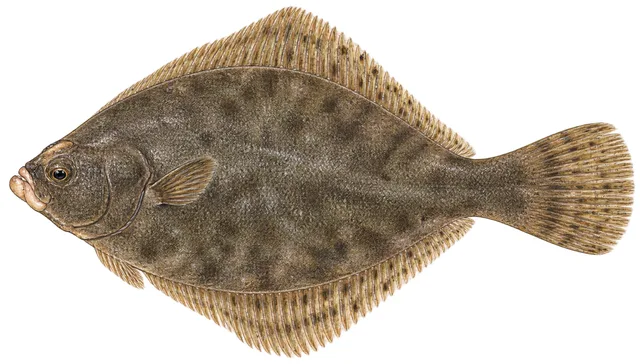
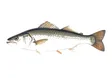
Winter Flounder field guide illustration

About Winter Flounder

The winter flounder (Pseudopleuronectes americanus), also known as the black back, is a right-eyed ("dextral") flatfish of the family Pleuronectidae. It is native to coastal waters of the western north Atlantic coast, from Labrador, Canada to Georgia, United States, although it is less common south of Delaware Bay. It is the most common near-shore (shallow-water) flounder in the waters from Newfoundland down through Massachusetts Bay, reaching a maximum size around 61 cm in length and 2.25 kg in weight. The species grows larger on Georges Bank, where they can reach a length of 70 cm and weight of 3.6 kg. Although winter flounder historically supported large commercial and recreational fisheries, biomass and landings have decreased since the 1980s.

Life cycle

Winter flounder lay up to 3.3 million demersal, adhesive eggs that are retained within their spawning grounds. Depending on temperature, larvae of approximately 3 mm in length hatch in two to three weeks. These larvae are planktonic at first, but transition to a bottom-oriented lifestyle over time. Around five to six weeks after hatching, the left eye of the larval flounder begins to migrate to the right side of the body. The "flounder-like" juveniles then settle onto the seafloor and move into saltwater coves, coastal salt ponds, estuaries, and protected bays, where they may grow up to 100 mm within the first year. Adult winter flounder may grow as large as 70 cm and reach ages of 15+ years. Growth varies across their distribution, with northern populations generally growing slower than those at the southern end of their range.

Taxonomy

The winter flounder is one of five species in the genus Pseudopleuronectes along with the Yellow-striped flounder, Cresthead flounder, Marbled flounder, and Dark flounder. It is the only congener to inhabit the Atlantic Ocean.

Winter flounder can be differentiated from the commonly co-occurring summer flounder (Paralichthys dentatus) by their small teeth and eyes nearly always positioned on the right side of their bodies. Meanwhile, summer flounder have their eyes on the left side of their bodies and possess large, conspicuous teeth.

Feeding and diet

Larval winter flounder are known to feed on nauplii, harpacticoids, calanoids, polychaetes, invertebrate eggs, and phytoplankton. As they grow, copepods, amphipods, and polychaetes all become more important elements of their diet. Adult winter flounder are opportunistic sight-feeders that target annelids, crustaceans, bivalves, and fish depending upon prey availability.

Reproduction

Winter flounder reach sexual maturity at about two to three years of age and a total length of 25–30 cm, with variance across their range. Mature adults (excluding those on Georges Bank) generally migrate in two phases, where adults enter shallow estuaries in the late fall and early spring to spawn in late winter or early spring before returning to deeper parts of the estuary or offshore waters. However, these migration patterns may be altered or individuals may stay inshore year round if temperatures remain at 15 °C or lower or if enough food is available. Genetic analyses and tagging studies indicate that there is little mixing between the Winter flounder populations in the Gulf of Maine, South of Cape Cod, and on Georges Bank.

Fisheries

Winter flounder are highly regarded for their delicious white meat and are sometimes called lemon sole in the U.S. They once supported large commercial and recreational fisheries, with peak harvests of 40.3 million pounds and 16.4 million pounds respectively. However, landings in both sectors have declined since the 1980s to 6 million pounds and 77,000 pounds respectively in 2013.

Winter flounder are managed as three stock units in U.S. coastal waters; Southern New England/Mid-Atlantic (SNE), Georges Bank (GB), and Gulf of Maine (GOM), where the status of each stock is as follows: SNE- overfished, overfishing is not occurring; GB- not overfished and overfishing is not occurring; GOM- unknown if they are overfished, overfishing is not occurring. Despite continued management efforts, habitat degradation, heavy fishing pressure, low genetic variability, and possibly climate change are combining to hinder the recovery of depleted Winter flounder populations.

Article text: Wikipedia contributors, Winter flounder (source revision). Licensed under CC BY-SA 4.0. Retrieved 2026-10-11.
NOAA Fisheries

Life history and status

NOAA management region
New England/Mid-Atlantic, Southeast

About the species

U.S. wild-caught winter flounder is a smart seafood choice because it is sustainably managed and responsibly harvested under U.S. regulations.

Population status

In U.S. waters, there are three stocks of winter flounder: Georges Bank, Southern New England/Mid-Atlantic, and Gulf of Maine. According to the most recent stock assessments: The Georges Bank stock is not overfished but still rebuilding, and is not subject to overfishing (2022 stock assessment). Summary stock assessment information can be found on Stock SMART . The Southern New England/Mid-Atlantic stock is not overfished, not subject to overfishing, and has rebuilt to the target population level (2022 stock assessment). Summary stock assessment information can be found on Stock SMART . The Gulf of Maine stock is not subject to overfishing and the overfished status is unknown because the population size could not be estimated due to highly uncertain assessment results (2022 stock assessment). Summary stock assessment information can be found on Stock SMART .

Appearance

  • Winter flounder have an oval shape and a thick body.
  • Their eyes are on the right side of their body.
  • They have a straight lateral line and dark coloring.
  • Their coloring often varies with their habitat, ranging from muddy to slightly reddish brown, olive green, or dark slate, to an almost black upper side.
  • Their underside is white, and their dorsal and anal fins are often tinged with pink, red, or yellow.

Biology

  • Winter flounder live 15 to 18 years and grow to more than 2 feet in length.
  • They spawn during the winter and spring in shallow inshore waters, often returning to the same areas where they were born to spawn.
  • Females usually produce between 500,000 and 1.5 million eggs.
  • They deposit their eggs on sandy bottoms and algal mats at night, usually about 40 times every spawning season.
  • Newly hatched larvae have one eye on each side of the head.
  • Five to six weeks after they hatch, larvae settle to the bottom to begin their transformation into juveniles.
  • After weeks of adapting to living on the bottom, their left eye migrates to the right side of their body and their metamorphosis is complete.
  • The growth and survival rates of larvae and juveniles depend on several factors, including temperature, salinity, water quality, and the availability of food.
  • Winter flounder feed during the day because they depend on sight to locate prey.
  • Their small mouths limit what they can eat.
  • They feed on small invertebrates, shrimp, clams, and worms.
  • Fish (mainly striped bass, bluefish, toadfish, and summer flounder), birds, invertebrates, winter skate, and marine mammals prey on larval and juvenile winter flounder.
  • Atlantic cod, spiny dogfish, and monkfish prey on adults.

Where they live

  • Winter flounder get their name because of their migrations. In the winter, adults migrate from offshore areas where they feed to inshore bays and estuaries where they spawn.
  • While inshore, they live on muddy sand, clean sand, clay, and pebbly or gravelly bottom habitats.
  • They often bury their whole body, except for their eyes, in bottom sediments.
  • Larvae and some 1-year-olds live in the estuaries where they were born.
  • Juveniles prefer sand or sand-silt bottoms with a wide range of salinity and temperature.
  • Winter flounder are found in estuaries and on the continental shelf of the Northwest Atlantic, from the Gulf of St. Lawrence, Canada to North Carolina. They are most common north of Delaware Bay.

Fishery management

There are three stocks of winter flounder in U.S. waters, the Gulf of Maine, Georges Bank, and Southern New England/Mid-Atlantic stocks.

NOAA Fisheries and the New England Fishery Management Council manage the fishery in federal waters. The Atlantic States Marine Fisheries Commission coordinates management of winter flounder in state waters (0 to 3 miles offshore).

Winter flounder, along with other groundfish in New England waters, are managed under the Northeast Multispecies Fishery Management Plan , which includes: Permitting requirements for commercial vessels. Separate management measures for recreational vessels. Time/Area Closures to protect spawning fish and habitat. Minimum fish sizes to prevent harvest of juvenile fish. Annual catch limits, based on best available science. An optional sector ( catch share ) program can be used for winter flounder and other groundfish species. The sector program allows fishermen to form harvesting cooperatives and work together to decide when, where, and how they harvest fish.

A rebuilding plan to rebuild the Georges Bank stock to the target population level is in place with a target date of 2029.

Management

Winter flounder is managed under the Northeast Multispecies (Groundfish) Fishery Management Plan (FMP) along with 12 other species of groundfish. Collectively, these 13 species are referred to as the Northeast multispecies complex.

Learn more about the Northeast multispecies complex and its management

Range

Where it lives

Share of 4,442 GBIF observation records with a state location, across 17 states.
0%
77.6%
Share of 4,442 GBIF observation records with a state location, across 17 states.

Habitat

Water and movement

Water
WoRMS records this species in the sea.

Classification

Taxonomy

Kingdom
Animalia
Phylum
Chordata
Superclass
Actinopterygii
Class
Teleostei
Order
Pleuronectiformes
Genus
Pseudopleuronectes
Species
Pseudopleuronectes americanus
ITIS TSN
172905
WoRMS AphiaID
158885
GBIF key
2409062
Outside the US
ITIS also files it in Canada.

Common questions about Winter Flounder

What is the scientific name of Winter Flounder?
The scientific name is Pseudopleuronectes americanus, in the family Pleuronectidae. Classification follows ITIS.
Does Winter Flounder live in fresh water or salt water?
WoRMS records this species in the sea.
Where has Winter Flounder been recorded in the United States?
GBIF has observations in 17 states, with the most records in Maine, Massachusetts, New York. The map shows observation records, which do not establish the complete natural range.

Same family

More Pleuronectidae