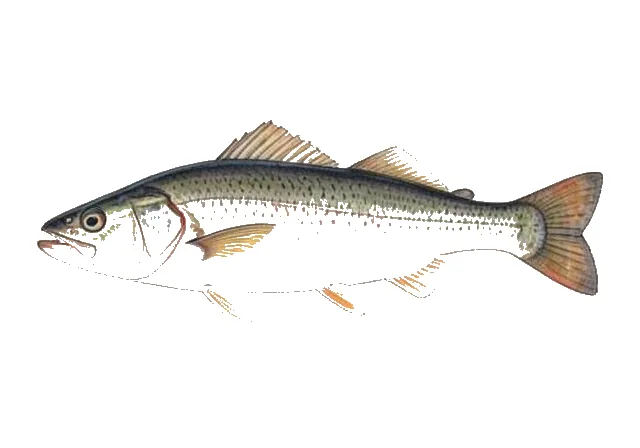
American Plaice

Hippoglossoides platessoides

Pleuronectidae · saltwater water fish

3 minute read · Species guide

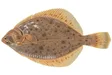
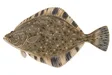
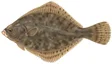
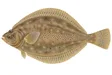
American Plaice field guide illustration

About American Plaice

American plaice are bottom-dwelling flounders of the northwestern Atlantic continental shelf. An adult's two eyes sit on the right side of its flattened body, but a newly hatched plaice begins life with an eye on each side of the head. That transformation accompanies a shift from drifting larval life to living near the seabed.

Appearance and identification

Adult American plaice are right-eyed flatfish with a large mouth, rounded tail, and an almost straight lateral line along the body. The upper, eyed surface is commonly reddish-brown, while the underside is white. These features describe the adult form after its early developmental transformation.

Sources: American Plaice species profile

Range, depth, and habitat

NOAA describes a continental-shelf range from southern Labrador to Rhode Island. In U.S. waters, American plaice occur throughout the Gulf of Maine and Georges Bank and can also be found in Maine and Massachusetts bays and estuaries.

They occupy seabeds of sand, mud, or fine gravel. Adults occur in relatively deep water, with NOAA reporting depths of about 130 to 980 feet. Juveniles generally use shallower parts of that range, typically around 130 to 590 feet. An observation near shore does not by itself mean the species normally lives at the shoreline.

Sources: American Plaice species profile

Diet and feeding

Diet changes with development. Larvae mainly eat plankton in the water column. Adults primarily take animals associated with the bottom, including brittle stars, sand dollars, polychaete worms, shrimps, and bivalve mollusks.

The larval and adult diets fit the different habitats used at those stages: young drifting fish obtain food in the water, while settled flatfish feed among bottom-dwelling organisms.

Sources: American Plaice species profile

Reproduction and the changing body

American plaice spawn and fertilize eggs near the seabed. The fertilized eggs float upward and hatch near the surface. Newly hatched larvae have a more conventional fish shape, including one eye on either side of the head.

As the young fish grows, its body flattens and the left eye moves to the right side. Once metamorphosis is complete, the juvenile settles to the bottom. The adult's asymmetry is therefore a developmental change, not the appearance with which it hatches.

Sources: American Plaice species profile

Lifespan and behavior

American plaice can survive for more than 20 years. NOAA describes them as relatively sedentary. Their distribution is closely associated with suitable shelf habitat, rather than with the long river-to-ocean migrations seen in some other fishes.

Sources: American Plaice species profile

Fishery and population assessment

American plaice are managed with other species in the Northeast groundfish complex. NOAA's profile cites a 2022 stock assessment that found the assessed population rebuilt to its target level and classified it as neither overfished nor undergoing overfishing.

Those terms describe an assessed fishery stock and its fishing pressure. They should be read with the assessment year and geographic context, rather than as a permanent verdict about every population of the species.

Sources: American Plaice species profile
Guide sources

Research reviewed 2026-10-13.

NOAA Fisheries

NOAA assessments and reference details

Lifespan
More than 20 years
NOAA management region
New England/Mid-Atlantic

Population status

American plaice is not overfished, not subject to overfishing, and has rebuilt to the target population level (2022 stock assessment). Summary stock assessment information can be found on Stock SMART .

Fishery management

Permitting requirements for commercial vessels.

Separate management measures for recreational vessels.

Time/Area closures to protect spawning fish and habitat.

Minimum fish sizes to prevent harvest of juvenile fish.

Annual catch limits, based on best available science.

An optional sector ( catch share ) program can be used for American plaice and other groundfish species. The sector program allows fishermen to form harvesting cooperatives and work together to decide when, where, and how they harvest fish.

Management

American plaice is managed under the Northeast Multispecies (Groundfish) Fishery Management Plan along with 12 other species of groundfish. Collectively, these 13 species are referred to as the Northeast multispecies complex.

Northeast multispecies complex and its management

Science

Every year, our Northeast Fisheries Science Center compiles valuable information from more than 600,000 species of fish, shark, and invertebrates collected by fishermen, scientists, and observers. This information gives scientists a detailed picture of the overall condition and health of northeast fisheries to ensure sustainable management.

For detailed information about stock status, management, assessments, and resource trends, you can search for American plaice, and any other species of interest, using NOAA’s StockSMART web tool .

Range

Where it lives

Share of 2,808 GBIF observation records with a state location, across 5 states.
0%
98.3%
Share of 2,808 GBIF observation records with a state location, across 5 states.

Habitat

Water and movement

Water
WoRMS records this species in the sea.

Classification

Taxonomy

Kingdom
Animalia
Phylum
Chordata
Superclass
Actinopterygii
Class
Teleostei
Order
Pleuronectiformes
Genus
Hippoglossoides
Species
Hippoglossoides platessoides
ITIS TSN
172877
WoRMS AphiaID
127137
GBIF key
2409104
Outside the US
ITIS also files it in Canada.

Common questions about American Plaice

What is the scientific name of American Plaice?
The scientific name is Hippoglossoides platessoides, in the family Pleuronectidae. Classification follows ITIS.
Does American Plaice live in fresh water or salt water?
WoRMS records this species in the sea.
Where has American Plaice been recorded in the United States?
GBIF has observations in 5 states, with the most records in Maine, Massachusetts, New Hampshire. The map shows observation records, which do not establish the complete natural range.
How long does American Plaice live?
NOAA Fisheries lists its lifespan as More than 20 years.

Same family

More Pleuronectidae