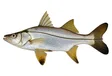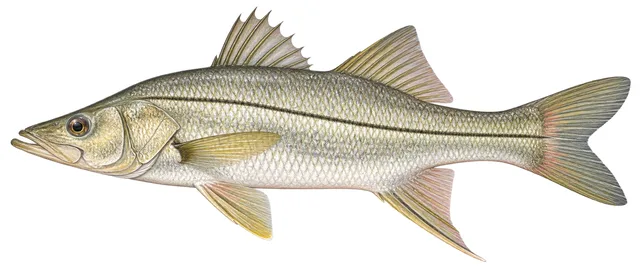
Swordspine Snook

Centropomus ensiferus

Centropomidae · freshwater and saltwater and brackish water fish

1 minute read · Species guide

Swordspine Snook field guide illustration

About Swordspine Snook

The swordspine snook uses the coastal waters, estuaries and lagoons of the western Atlantic. Records run from southern Florida through the Caribbean to Rio de Janeiro.

Range and natural history

It can enter fresh water and is often associated with very low salinity. Soft-bottom habitats are reported. This makes the connection between the lower river and coastal lagoon important to its natural history, rather than treating those waters as separate worlds.

Its food includes small fish, especially anchovies and herrings, together with crustaceans such as shrimps. These prey records describe a fish-eating predator with an important invertebrate component.
Sources: Centropomus ensiferus species summary

Guide sources

Research reviewed 2026-10-19.

Range

Where it lives

Share of 13 GBIF observation records with a state location, across 1 states.
0%
100%
Share of 13 GBIF observation records with a state location, across 1 states.

Share of records by state

Habitat

Water and movement

Water
WoRMS records this species in fresh water, brackish water and the sea.

Classification

Taxonomy

Kingdom
Animalia
Phylum
Chordata
Superclass
Actinopterygii
Class
Teleostei
Order
Perciformes
Genus
Centropomus
Species
Centropomus ensiferus
ITIS TSN
167645
WoRMS AphiaID
280060
GBIF key
2369651
Outside the US
ITIS also files it in Caribbean Territories.

Common questions about Swordspine Snook

What is the scientific name of Swordspine Snook?
The scientific name is Centropomus ensiferus, in the family Centropomidae. Classification follows ITIS.
Does Swordspine Snook live in fresh water or salt water?
WoRMS records this species in fresh water, brackish water and the sea.
Where has Swordspine Snook been recorded in the United States?
GBIF has observations in 1 states, with the most records in Florida. The map shows observation records, which do not establish the complete natural range.

Closest relatives

Other Centropomus species

Same family

More Centropomidae