Spring Pygmy Sunfish

Elassoma alabamae

Elassomatidae · freshwater water fish

4 minute read · Species guide

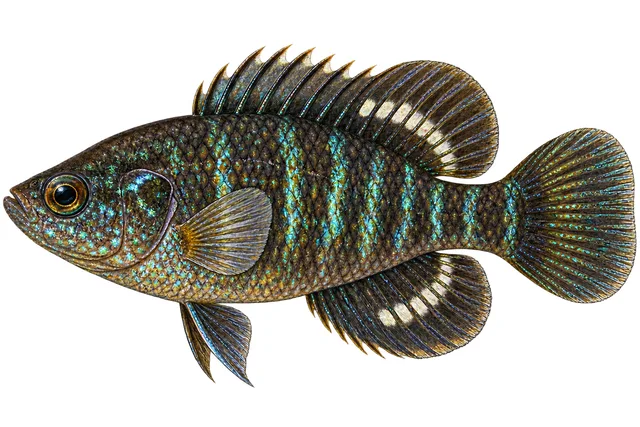
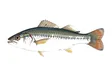
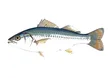
Spring Pygmy Sunfish field guide illustration

About Spring Pygmy Sunfish

The spring pygmy sunfish, Elassoma alabamae, is a species of pygmy sunfish endemic to springs in northern Alabama. It was historically known to occur in springs in North Alabama along the Tennessee River in Limestone and Lauderdale counties. The spring pygmy sunfish was first discovered in Cave Spring in Lauderdale County, Alabama in 1937 but in 1938, this site was flooded by the creation of the Pickwick Reservoir. The spring pygmy sunfish was considered extinct until its rediscovery in the Beaverdam Spring complex in 1973 by researchers from the University of Tennessee.

Appearance

The spring pygmy sunfish is a small fish that rarely exceeds an inch long. Males and females exhibit different coloration. Breeding males are vividly colored. Overall the breeding male is very dark except for vertical, iridescent blue-green bars along the body and iridescent mottling on the cheek. Females are more muted in coloration when compared to the males.

Habitat

The preferred habitat for the spring pygmy sunfish is spring water, and associated spring-fed wetlands. The species is most abundant at the spring head and spring pool area.

Diet

Diet likely consists of small aquatic invertebrates such as amphipods, isopods, and larvae of mayflies, caddisflies, and midges.

Historical range

Historically, this fish was known to occur at two other sites in northern Alabama, one in Limestone County and the other in Lauderdale County. The species decline has been attributed to water pollution, a reduction of water quantity and impoundments. It was listed as a threatened species under the Endangered Species Act in 2013.

Current range

Currently, the only spring-dwelling population occurs in Limestone County in the Beaverdam-Moss Spring/Swamp spring system, where it is threatened by the construction of an automobile plant, though a conservation agreement was reached between the manufacturers and the Center for Biological Diversity. The Beaverdam spring and creek complex was formerly thought to be the only remaining habitat of the species, but in 2015 another population was discovered in the Blackwell Swamp of Wheeler National Wildlife Refuge in Madison County.

Conservation challenges

The spring pygmy sunfish and its habitat are currently facing the threats of both declining water quality and quantity. Possible excessive groundwater usage, and the resultant reduction of water quantity in the aquifer/recharge areas and decreased spring outflow in the Beaverdam Spring/Creek system, is believed to have negatively impacted the spring pygmy sunfish and its habitat. Increased contamination of the recharge area and aquifer from the intensive use of chemicals (i.e., herbicides, pesticides, fertilizers) and possible overgrazing by livestock and land clearing near and within the water systems reduces the vegetation in the spring and increases stormwater runoff within the spring pygmy sunfish's habitat. Stormwater discharge from agricultural lands compounds the water quality degradation by increasing sediment load and depositing contaminants into surface and groundwater sources. Recently, land use practices have begun to change surrounding spring pygmy sunfish habitat. Land that has been historically used for agriculture is being converted into higher density residential and industrial developments. These large-scale residential and industrial developments can place a different set of environmental stressors (i.e. impervious surfaces and stormwater runoff) on aquatic habitats and potentially reduce water quantity and quality within the Beaverdam Spring/Creek system.

Article text: Wikipedia contributors, Spring pygmy sunfish (source revision). Licensed under CC BY-SA 4.0. Retrieved 2026-10-11.
Diet and feeding

The FishTraits compilation records these diet categories for this species: invertebrates or larval fish. These are broad categories, not a claim that every individual consumes every example in a category.

Reported feeding positions include bottom feeding and surface or water-column feeding. The compilation combines published observations; diets can vary with age, locality, and available food.

Habitat preferences

Reported habitat associations include creeks, springs or subterranean waters.

The source records associations with gravel, cobble, vegetation. An association indicates reported use, rather than an exclusive requirement.

Reproduction and parental care

The compilation reports a representative maturity age of 1 years. Its maturity field summarizes mean, median, or modal estimates, usually for females; male estimates can be used when female data are unavailable. It is not a fixed age at which every fish first breeds.

Recorded spawning months are Mar, Apr for the source’s reporting region (AL). This is a regional calendar, not a range-wide schedule.

The reproductive-guild classification includes spawning on open substrates without guarding the brood.

Size and recorded longevity

FishTraits reports a maximum total length of 2.5 centimetres. Some entries use an estimated asymptotic length; this value should not be treated as a certified record catch.

Recorded longevity in the compilation is 1.5 years. Wild observations were preferred, but captive records were accepted where wild records were unavailable, and unspecified records were assumed wild. The value is not a guaranteed wild lifespan or an aquarium life expectancy.

Range

Where it lives

Share of 46 GBIF observation records with a state location, across 1 states.
0%
100%
Share of 46 GBIF observation records with a state location, across 1 states.

Share of records by state

Habitat

Water and movement

Water
WoRMS records this species in fresh water.
Migration
Not migratory

Classification

Taxonomy

Kingdom
Animalia
Phylum
Chordata
Superclass
Actinopterygii
Class
Teleostei
Order
Perciformes
Genus
Elassoma
Species
Elassoma alabamae
ITIS TSN
202001
WoRMS AphiaID
1384052
GBIF key
2380538

Common questions about Spring Pygmy Sunfish

What is the scientific name of Spring Pygmy Sunfish?
The scientific name is Elassoma alabamae, in the family Elassomatidae. Classification follows ITIS.
Does Spring Pygmy Sunfish live in fresh water or salt water?
WoRMS records this species in fresh water.
Where has Spring Pygmy Sunfish been recorded in the United States?
GBIF has observations in 1 states, with the most records in Alabama. The map shows observation records, which do not establish the complete natural range.

Closest relatives

Other Elassoma species

Same family

More Elassomatidae