Okefenokee Pygmy Sunfish

Elassoma okefenokee

Elassomatidae · freshwater water fish

2 minute read · Species guide

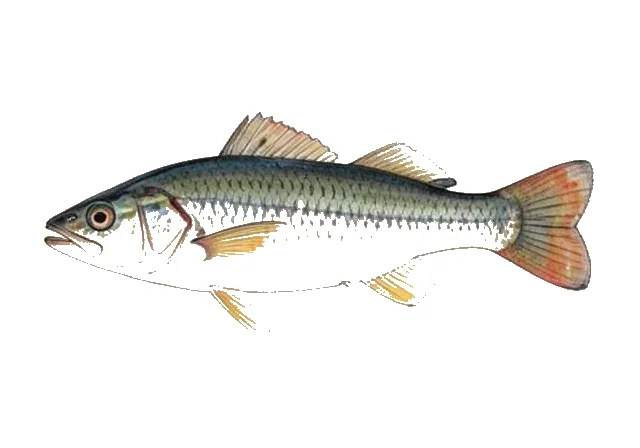
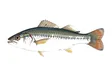
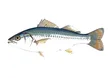
Okefenokee Pygmy Sunfish field guide illustration

About Okefenokee Pygmy Sunfish

The Okefenokee pygmy sunfish, Elassoma okefenokee, is a species of pygmy sunfish found in southeastern United States, where it prefers waters with dense vegetation growth in the Altamaha drainage in southern Georgia south to Lake Okeechobee, Florida, interior lake basins in north-central Florida, and upper Suwannee, Withlacoochee, and Hillsborough river drainages on the Gulf Coast of Florida. This species can reach 3.4 cm (1.3 in) in total length.

Description

The Okefenokee pygmy sunfish is an olive green color fish with brownish-red mottling across the body, mixed with bright blue colors. Elassoma okefenokee differs from its close relative Elassoma gilberti by only having three preopercular canals (gilberti has, on average, four). The average number of anal fin rays is seven in E. gilberti whereas E. okefenokee has 8. The female E. gilberti often expresses a blue patch of color behind her eye and on her body, while the E. okefenokee does not.

Diet

Some good foods to try in the aquarium are California blackworms, daphnia, Grindal worms, microworms, and having a healthy population of snails. Some pygmy sunfish will learn to supplement their diet with crushed flake food, but this should not be relied upon as the only food source. The crushed fish flakes are a good idea, though, because they will feed the microfauna that will in turn feed the Elassoma.

Habitat

Elassoma okefenokee is a freshwater, demersal fish which spends its time in dense vegetation growth in waters with a pH range of 6.0-8.0 and a dH range of 5-unknown. Their preferred temperature range is 4–30 °C (39–86 °F).

Reproduction and life cycle

The male turns black with blue sparkles while the females remains clear, tan, and light brown.

Importance to humans

E. okefenokee are moderate-expert aquarium fish. They can breed in as little as 5 gallons of water and prefer a well planted aquarium.

Etymology

Elassoma stems from the Greek, elasson (meaning smaller) plus the Greek, soma (meaning body) in reference to the fishes' diminutive size compared to the true sunfishes

Article text: Wikipedia contributors, Okefenokee pygmy sunfish (source revision). Licensed under CC BY-SA 4.0. Retrieved 2026-10-11.
Habitat preferences

Reported habitat associations include creeks.

The source records associations with muck, clay or silt, vegetation. An association indicates reported use, rather than an exclusive requirement.

Reproduction and parental care

Recorded spawning months are Jan, Feb, Mar for the source’s reporting region (FL). This is a regional calendar, not a range-wide schedule.

The reproductive-guild classification includes guarding eggs or young at a spawning substrate or nest.

Size and recorded longevity

FishTraits reports a maximum total length of 3.4 centimetres. Some entries use an estimated asymptotic length; this value should not be treated as a certified record catch.

Range

Where it lives

Share of 324 GBIF observation records with a state location, across 3 states.
0%
91%
Share of 324 GBIF observation records with a state location, across 3 states.

Habitat

Water and movement

Water
WoRMS records this species in fresh water.
Migration
Not migratory

Classification

Taxonomy

Kingdom
Animalia
Phylum
Chordata
Superclass
Actinopterygii
Class
Teleostei
Order
Perciformes
Genus
Elassoma
Species
Elassoma okefenokee
ITIS TSN
168170
WoRMS AphiaID
1013977
GBIF key
2380534

Common questions about Okefenokee Pygmy Sunfish

What is the scientific name of Okefenokee Pygmy Sunfish?
The scientific name is Elassoma okefenokee, in the family Elassomatidae. Classification follows ITIS.
Does Okefenokee Pygmy Sunfish live in fresh water or salt water?
WoRMS records this species in fresh water.
Where has Okefenokee Pygmy Sunfish been recorded in the United States?
GBIF has observations in 3 states, with the most records in Florida, Georgia, North Carolina. The map shows observation records, which do not establish the complete natural range.

Closest relatives

Other Elassoma species

Same family

More Elassomatidae