Article text: Wikipedia contributors, Lagocephalus laevigatus (source revision). Licensed under CC BY-SA 4.0. Retrieved 2026-10-11.
Smooth Puffer
Lagocephalus laevigatus
Tetraodontidae · saltwater and brackish water fish
1 minute read · Species guide
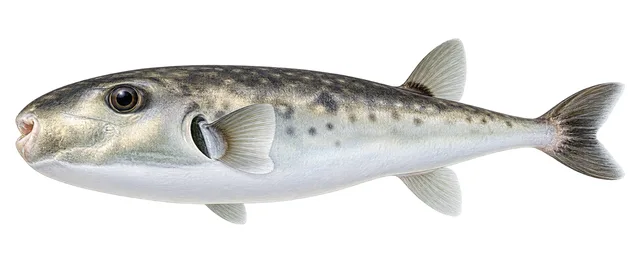
About Smooth Puffer
Lagocephalus laevigatus, known as the smooth puffer, is a species of pufferfish in the family Tetraodontidae. It is native to the Western Atlantic, where it ranges from New England to Argentina, as well as the Eastern Atlantic, where it ranges from Mauritania to Namibia. Adults of the species are pelagic and found near continental margins, whereas juveniles are usually found closer to shore or offshore banks, with both occurring either alone or in small, loose groups. It occurs at a depth range of 10 to 180 m (33 to 591 ft) over sandy or muddy bottoms and is a very large pufferfish, reaching 100 cm (39.4 inches) in total length. The species feeds on fish and shrimp and can be dangerously toxic if ingested. It is known to be oviparous. It is sometimes confused with the related species Lagocephalus inermis which is native to the Indo-Pacific.
Range
Where it lives
0%
93.5%of mapped records
Habitat
Water and movement
- Water
- WoRMS records this species in brackish water and the sea.
Classification
Taxonomy
- Kingdom
- Animalia
- Phylum
- Chordata
- Superclass
- Actinopterygii
- Class
- Teleostei
- Order
- Tetraodontiformes
- Family
- Tetraodontidae
- Genus
- Lagocephalus
- Species
- Lagocephalus laevigatus
- ITIS TSN
- 173285
- WoRMS AphiaID
- 158933
- GBIF key
- 2407750
- Outside the US
- ITIS also files it in Caribbean Territories.
Common questions about Smooth Puffer
What is the scientific name of Smooth Puffer?
The scientific name is Lagocephalus laevigatus, in the family Tetraodontidae. Classification follows ITIS.
Does Smooth Puffer live in fresh water or salt water?
WoRMS records this species in brackish water and the sea.
Where has Smooth Puffer been recorded in the United States?
GBIF has observations in 16 states, with the most records in Texas, Florida, Alabama. The map shows observation records, which do not establish the complete natural range.
Same family
More Tetraodontidae
Bandtail Puffer15 states
Sphoeroides spengleriTetraodontidaeNativeSaltBrackish
Blunthead Puffer8 states
Sphoeroides pachygasterTetraodontidaeNativeSalt
Checkered Puffer5 states
Sphoeroides testudineusTetraodontidaeNativeSaltBrackish
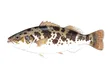
Marbled Puffer8 states
Sphoeroides dorsalisTetraodontidaeNativeSalt
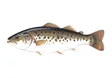
Northern Puffer17 states
Sphoeroides maculatusTetraodontidaeNativeSaltBrackish
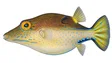
Sharpnose Puffer7 states
Canthigaster rostrataTetraodontidaeNativeSalt
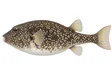
Southern Puffer9 states
Sphoeroides nephelusTetraodontidaeNativeSaltBrackish
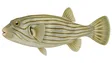
Striped Puffer
Arothron manilensisTetraodontidaeNativeSaltBrackish