Northern Puffer

Sphoeroides maculatus

Tetraodontidae · saltwater and brackish water fish

2 minute read · Species guide

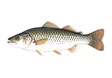
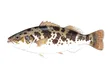
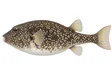
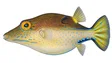
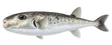
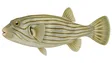
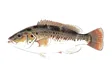
Northern Puffer field guide illustration

About Northern Puffer

The northern puffer, Sphoeroides maculatus, is a species in the family Tetraodontidae, or pufferfishes, found along the Atlantic coast of North America. Unlike many other pufferfish species, the flesh of the northern puffer is not poisonous, although its viscera can contain poison, and high concentrations of toxins have been observed in the skin of Floridian populations. They are commonly called sugar toads in the Chesapeake Bay region, where they are eaten as a delicacy. There was widespread consumption of northern puffers during the rationing that accompanied the Second World War, establishing a commercial fishery that reached its zenith in the 1960s. In much of the Northeast, the fish is known simply as "blowfish"or"chicken of the sea". They may also be sold as "sea squab".

Description

The northern puffer has the shape of a club. Adults have small spines covering the entire body with a tiny beak-like mouth. It is characterized by vertical stripes with a gray to brown dorsal surface and a yellow to white belly. It has tiny jet-black pepper spots (about 1 mm in diameter) scattered over most of pigmented surface, particularly evident on cheeks. Lower sides of the body have a row of black, elongate, bar-like markings. A small dorsal fin is set far back near the tail. Sphoeroides maculatus, like others in the puffer family, "puffs up" into a ball in self-defense by inhaling water into a special chamber near its stomach. They will puff up with air if taken out of the water. The northern puffer reaches up to 36 cm (1 ft 2 in) in length, but is usually around 20 cm (8 in).

Habitat

The northern puffer inhabits bays, estuaries and protected coastal waters at depths of 10–183 m (33–600 ft) in the northwest Atlantic. It ranges from Florida (U.S.) to Newfoundland (Canada).

Diet

The northern puffer feeds primarily on shellfish, and occasionally on finfish. Using its beak-like mouth it can extract shellfish from their shells and sometimes break the shells to obtain a meal. They will attack blue crabs, blowing water underneath to turn the crab over, then attack the underside before it can right itself.

Life cycle

Northern puffers spawn from May through August in shallow water over sandy or muddy bottoms. The adhesive eggs are defended by the male until they hatch.

Article text: Wikipedia contributors, Northern puffer (source revision). Licensed under CC BY-SA 4.0. Retrieved 2026-10-11.
Range

Where it lives

Share of 1,375 GBIF observation records with a state location, across 17 states.
0%
19.5%
Share of 1,375 GBIF observation records with a state location, across 17 states.

Habitat

Water and movement

Water
WoRMS records this species in brackish water and the sea.

Classification

Taxonomy

Kingdom
Animalia
Phylum
Chordata
Superclass
Actinopterygii
Class
Teleostei
Order
Tetraodontiformes
Genus
Sphoeroides
Species
Sphoeroides maculatus
ITIS TSN
173290
WoRMS AphiaID
158934
GBIF key
2407857
Outside the US
ITIS also files it in Canada, Mexico.

Common questions about Northern Puffer

What is the scientific name of Northern Puffer?
The scientific name is Sphoeroides maculatus, in the family Tetraodontidae. Classification follows ITIS.
Does Northern Puffer live in fresh water or salt water?
WoRMS records this species in brackish water and the sea.
Where has Northern Puffer been recorded in the United States?
GBIF has observations in 17 states, with the most records in North Carolina, New Jersey, New York. The map shows observation records, which do not establish the complete natural range.

Closest relatives

Other Sphoeroides species

Same family

More Tetraodontidae