Appearance and identification
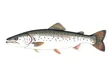
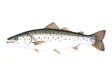
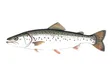
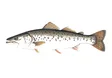
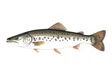
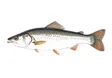
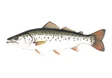
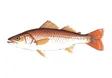
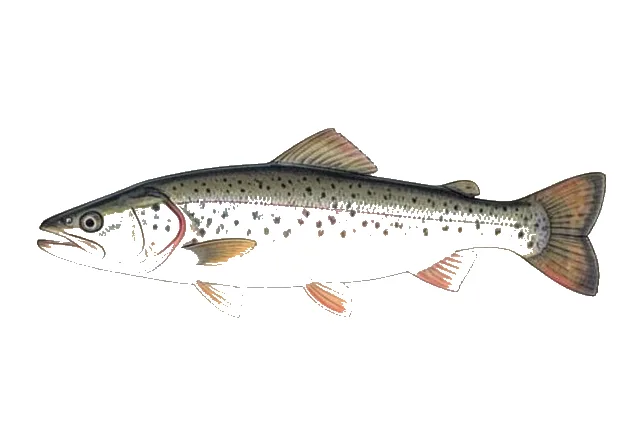
Pacific cod are sometimes called gray cod. Their brown or grayish bodies have darker spotting or patterns on the sides and a lighter belly. A long barbel hangs from the chin, and the dusky fins have pale edges.
That whisker-like barbel is a conspicuous feature near the mouth. It is part of the fish's anatomy, not evidence that Pacific cod are catfish; the two groups belong to different families.
Sources: Pacific Cod species profile
Size, growth, and lifespan
NOAA reports lengths reaching six feet and a lifespan of 20 years or less. Females commonly become capable of reproduction at four or five years old, when they are approximately 1.6 to 1.9 feet long. Adult maximum length and the smaller length at maturity describe different stages.
Sources: Pacific Cod species profile
Range and bottom habitat
Pacific cod occupy coastal waters around the North Pacific. NOAA describes a range from the Bering Sea south to southern California on the eastern side, and to the Sea of Japan on the western side. They become less common in central California and are rare farther south.
Large juveniles and adults remain close to the seabed, favoring mud, sand, and clay habitats. Larvae and small juveniles instead occur across the water column. A species-level range map cannot show all those differences in vertical habitat use.
Sources: Pacific Cod species profile
Diet and feeding
Pacific cod eat clams, worms, crabs, shrimp, and juvenile fishes. Their prey includes both invertebrates and other fish, so describing them simply as fish-eaters would leave out a substantial part of the diet listed by NOAA.
Sources: Pacific Cod species profile
Spawning and reproduction
Spawning occurs from January through May along the continental-shelf edge and upper slope. NOAA describes spawning depths of approximately 330 to 820 feet. A female can produce more than a million eggs during spawning.
The large number of eggs is a measure of reproductive output. It does not imply that the same number of juveniles or adults will later be present in the population.
Sources: Pacific Cod species profile
Schooling and seasonal movement
Cod school together and change depth and location seasonally. Winter habitat includes the outer shelf and upper slope, while summer movements take them into shallower feeding areas, often 300 feet deep or less.
The pattern links deeper spawning areas with shallower shelf feeding grounds. Seasonal catches from different depths can therefore reflect a recurring life-history movement rather than a change in the species' overall geographic range.
Sources: Pacific Cod species profile
Stocks and conservation context
NOAA recognizes Bering Sea, Gulf of Alaska, Aleutian Islands, and Pacific coast stocks. They are assessed and managed separately, and the amount of assessment information differs among them. A result for one stock should not be substituted for an unassessed population elsewhere.
For Alaska, estimates of spawning biomass help scientists assess population condition. That measure concerns the reproductive population and provides more useful management context than simply counting all fish of every age together.
Sources: Pacific Cod species profile