Ozark Cavefish

Amblyopsis rosae

Amblyopsidae · freshwater water fish

3 minute read · Species guide

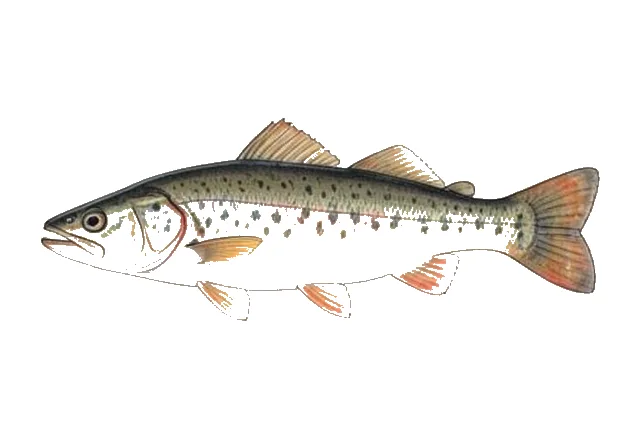
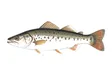
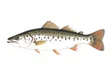
Ozark Cavefish field guide illustration

About Ozark Cavefish

The Ozark cavefish, Troglichthys rosae, is a small subterranean freshwater fish endemic to the United States. It has been listed as a threatened species in the US since 1984; the IUCN currently lists the species as Near Threatened, though it was previously listed as Vulnerable (VU D1+2 v2.3) between 1986 and 1996. It is listed as Endangered and Threatened by the Missouri Department of Conservation.

Description

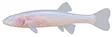
The Ozark cavefish is pinkish-white and reaches a maximum length of 2 inches (5.1 cm). The head is flattened, and it has a slightly protruding lower jaw. The fish has no pelvic fin; the dorsal and anal fins are further back than on most fish. It has only rudimentary eyes and no optic nerve. The Ozark cavefish lives only in caves. It has no pigmentation and has lost some unused characteristics. However, it is accustomed to a cave environment due to well-developed sensory papillae. They feed primarily on microscopic organisms, as well as small crustaceans and salamander larvae. Their reproductive rate is low compared to most other fish.

Habitat

Caves which have populations of the Ozark cavefish all have a relatively large source of nutrients, such as bat guano or blown leaf litter. Water quality in caves containing them is usually high. This is in part due to the role this species plays in preserving cave ecosystems through its feeding activity. Ozark cavefish are able to tolerate the extremely low oxygen content of ground water found in caves. They tend to occur in flowing cave streams as opposed to quiet pools. The Ozark cavefish can receive nutrients from the tree roots above the cave. The roots are full of nutrients and water. The roots spread photosynthetic products in the cave, so organisms like Ozark cavefish and other species are able to feed on the roots.

Distribution

The geographic distribution of Ozark cavefish consists of northeastern Oklahoma, northwestern Arkansas, and southwestern Missouri. The fish is native to the Springfield Plateau of the Ozark Highlands. Currently, 15 caves in this area have verified populations. In Oklahoma, populations are known to occur in Delaware County. Historical records for Ottawa and Mayes Counties also indicate populations. Factors that have led to the decline of the Ozark cavefish include destruction of habitat, collecting of specimens, and disturbance by spelunkers.

Article text: Wikipedia contributors, Ozark cavefish (source revision). Licensed under CC BY-SA 4.0. Retrieved 2026-10-12.
Diet and feeding

The FishTraits compilation records these diet categories for this species: invertebrates or larval fish; larger animal prey (a source category covering fish, crayfish, crabs, or frogs). These are broad categories, not a claim that every individual consumes every example in a category.

Reported feeding positions include bottom feeding. The compilation combines published observations; diets can vary with age, locality, and available food.

Habitat preferences

Reported habitat associations include streams and small rivers, springs or subterranean waters.

The source records associations with gravel, cobble. An association indicates reported use, rather than an exclusive requirement.

Reproduction and parental care

The compilation reports a representative maturity age of 4 years. Its maturity field summarizes mean, median, or modal estimates, usually for females; male estimates can be used when female data are unavailable. It is not a fixed age at which every fish first breeds.

Recorded spawning months are Feb, Mar, Apr for the source’s reporting region (AR). This is a regional calendar, not a range-wide schedule.

Size and recorded longevity

FishTraits reports a maximum total length of 6.2 centimetres. Some entries use an estimated asymptotic length; this value should not be treated as a certified record catch.

Recorded longevity in the compilation is 10 years. Wild observations were preferred, but captive records were accepted where wild records were unavailable, and unspecified records were assumed wild. The value is not a guaranteed wild lifespan or an aquarium life expectancy.

Range

Where it lives

Share of 141 GBIF observation records with a state location, across 3 states.
0%
43.3%
Share of 141 GBIF observation records with a state location, across 3 states.

Habitat

Water and movement

Water
WoRMS records this species in fresh water.
Migration
Not migratory

Classification

Taxonomy

Kingdom
Animalia
Phylum
Chordata
Superclass
Actinopterygii
Class
Teleostei
Order
Percopsiformes
Genus
Amblyopsis
Species
Amblyopsis rosae
ITIS TSN
164394
WoRMS AphiaID
1019177
GBIF key
5212779

Common questions about Ozark Cavefish

What is the scientific name of Ozark Cavefish?
The scientific name is Amblyopsis rosae, in the family Amblyopsidae. Classification follows ITIS.
Does Ozark Cavefish live in fresh water or salt water?
WoRMS records this species in fresh water.
Where has Ozark Cavefish been recorded in the United States?
GBIF has observations in 3 states, with the most records in Missouri, Arkansas, Oklahoma. The map shows observation records, which do not establish the complete natural range.

Closest relatives

Other Amblyopsis species

Same family

More Amblyopsidae