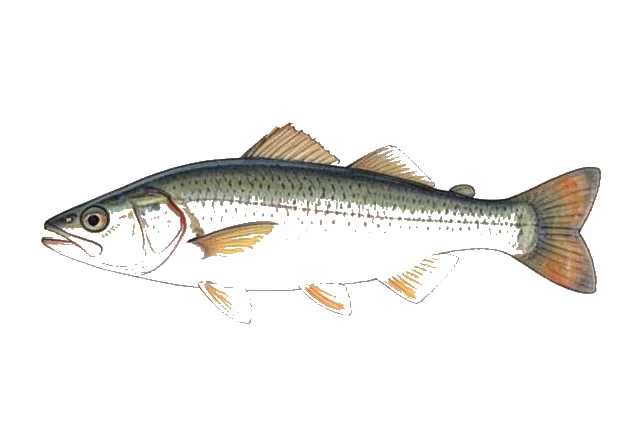
Pacific Flatnose

Antimora microlepis

Moridae · saltwater water fish

1 minute read · Species guide

Pacific Flatnose field guide illustration

About Pacific Flatnose

The Pacific flatnose is a deep-water North Pacific fish recorded from Japan through the Bering Sea and south to the Gulf of California, with records at Johnston Island.

Range and natural history

It is especially associated with the lower continental slope, often around 800–1,800 meters. A short chin barbel, pointed snout and long soft-rayed fins help characterize the body. Color varies from blue-gray or olive to very dark violet or blue-black, with darker fin margins.

The fish feeds on bottom-dwelling invertebrates and is encountered in deep trawl fisheries. The FishBase account notes differences in where the sexes occur but leaves large-scale movement unresolved. A catch from a feeding area therefore should not automatically be interpreted as evidence for a known migration route.

Sources: Antimora microlepis species summary

Guide sources

Research reviewed 2026-10-19.

Range

Where it lives

Share of 115 GBIF observation records with a state location, across 6 states.
0%
46.1%
Share of 115 GBIF observation records with a state location, across 6 states.

Habitat

Water and movement

Water
WoRMS records this species in the sea.

Classification

Taxonomy

Kingdom
Animalia
Phylum
Chordata
Superclass
Actinopterygii
Class
Teleostei
Order
Gadiformes
Family
Moridae
Genus
Antimora
Species
Antimora microlepis
ITIS TSN
164673
WoRMS AphiaID
272460
GBIF key
2417122
Outside the US
ITIS also files it in Canada, Mexico.

Common questions about Pacific Flatnose

What is the scientific name of Pacific Flatnose?
The scientific name is Antimora microlepis, in the family Moridae. Classification follows ITIS.
Does Pacific Flatnose live in fresh water or salt water?
WoRMS records this species in the sea.
Where has Pacific Flatnose been recorded in the United States?
GBIF has observations in 6 states, with the most records in California, Alaska, Washington. The map shows observation records, which do not establish the complete natural range.