Northern Sand Lance

Ammodytes dubius

Ammodytidae · saltwater water fish

1 minute read · Species guide

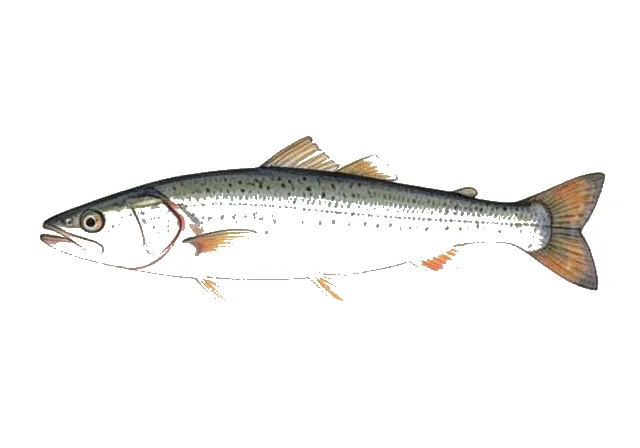
Northern Sand Lance field guide illustration

About Northern Sand Lance

The northern sand lance is an elongated North Atlantic fish whose western range reaches from Greenland to North Carolina. It also occurs in the northeastern Atlantic.

Range and natural history

Compared with more coastal sand-lance settings, FishBase associates this species with offshore, fully marine water. Reported depths extend to about 108 meters. It feeds on small crustaceans and worms, with the copepod Calanus finmarchicus an important recorded prey.

Its long dorsal and anal fins and slender outline are useful starting points, but identification also depends on counts and other anatomical characters. A narrow, silvery fish in a feeding flock is not enough to establish the species. Sand-lance names and the location of the observation should be checked together.

Sources: Ammodytes dubius species summary
Guide sources

Research reviewed 2026-10-19.

Range

Where it lives

Share of 42 GBIF observation records with a state location, across 7 states.
0%
42.9%
Share of 42 GBIF observation records with a state location, across 7 states.

Habitat

Water and movement

Water
WoRMS records this species in the sea.

Classification

Taxonomy

Kingdom
Animalia
Phylum
Chordata
Superclass
Actinopterygii
Class
Teleostei
Order
Perciformes
Genus
Ammodytes
Species
Ammodytes dubius
ITIS TSN
171674
WoRMS AphiaID
151520
GBIF key
2389990
Outside the US
ITIS also files it in Canada.

Common questions about Northern Sand Lance

What is the scientific name of Northern Sand Lance?
The scientific name is Ammodytes dubius, in the family Ammodytidae. Classification follows ITIS.
Does Northern Sand Lance live in fresh water or salt water?
WoRMS records this species in the sea.
Where has Northern Sand Lance been recorded in the United States?
GBIF has observations in 7 states, with the most records in Massachusetts, Virginia, New Jersey. The map shows observation records, which do not establish the complete natural range.

Closest relatives

Other Ammodytes species

Same family

More Ammodytidae