Appearance and similar species
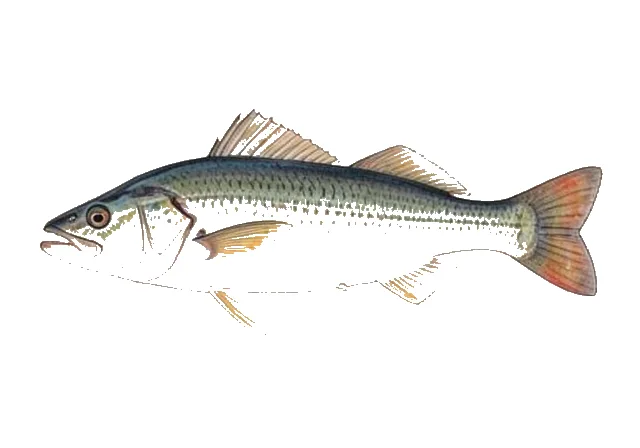
A ladyfish has a long, streamlined body, large eyes, a deeply forked tail, and a straight lateral line. Its sides are silver, with bluish or greenish tones above. A narrow bony plate sits between the lower jaws.
Northern ladyfish and Elops smithi overlap in external characters. Smithsonian researchers distinguish them through genetic evidence and vertebral counts, so a photograph alone may not resolve the identity of every individual.
Sources: Elops saurus: Northern Ladyfish
Classification and naming
ITIS places Elops saurus in the family Elopidae and order Elopiformes. Linnaeus described the species in 1766. The name ladyfish is a common name, while the two-part scientific name identifies the particular species discussed here.
Using the scientific name matters because common names can be shared or applied differently across regions. Records filed as another Elops species should not be added to this page simply because they are also called ladyfish.
Sources: Elops saurus, TSN 161111
Range and coastal habitat
The Smithsonian account describes a northern ladyfish range from New England to the Gulf of Mexico, with possible isolated records farther south. Estuaries, lagoons, mangrove areas, and shallow coastal water are characteristic habitats; mature fish also occur farther offshore.
Older accounts use broader ladyfish ranges. The distinction between northern and southern species is important when comparing those descriptions with current identification resources.
Sources: Elops saurus: Northern Ladyfish
Size and lifespan
The Florida Museum reports maximum size around three feet and 15 pounds, and a lifespan of at least six years. The phrase at least is important: it is a documented age statement, not a firmly established maximum lifespan.
Sources: Ladyfish species profile
Diet and feeding
Adult ladyfish eat other fishes and decapod crustaceans. Later larvae feed on zooplankton. The life-history account therefore describes a change in food as the fish develops, rather than one diet followed unchanged from larva to adult.
Sources: Estuarine-catadromy: ladyfish life-history summary, page 19
Spawning and the larval journey
The NOAA-hosted life-history review describes adults moving from inshore water toward offshore spawning areas, followed by larvae returning toward coastal nursery habitat. It notes uncertainty about exact spawning locations, egg descriptions, and seasonal timing in the literature it reviewed.
Young ladyfish pass through a leptocephalus stage: a transparent, ribbon-like larva very unlike the adult fish. Estuaries, marshes, and mangroves provide nursery habitat for later larvae and juveniles. Nursery protection therefore concerns a developmental stage that may not resemble the fish anglers recognize.
Sources: Estuarine-catadromy: ladyfish life-history summary, page 19
Behavior and encounters with people
The Florida Museum describes the familiar jumping and surface-skipping behavior of hooked ladyfish. Their bony flesh gives them a different reputation as food from their reputation as sporting fish. A jumping fish's common name still does not substitute for species-level identification.
Sources: Ladyfish species profile
Predators and habitat threats
The museum lists predatory birds, sharks, porpoises, and alligators among threats to adult ladyfish. Larger fishes and carnivorous zooplankton can also consume early stages.
Development affects the estuaries, coastal marshes, and mangrove nurseries used by young fish. The life-history review identifies loss of nursery habitat as a concern even where adults are encountered in open coastal water.
Sources: Ladyfish species profile; Estuarine-catadromy: ladyfish life-history summary, page 19
Guide sources
Research reviewed 2026-10-13.
- Elops saurus: Northern Ladyfish — Smithsonian Tropical Research Institute
- Ladyfish species profile — Florida Museum of Natural History
- Estuarine-catadromy: ladyfish life-history summary, page 19 — NOAA technical report
- Elops saurus, TSN 161111 — Integrated Taxonomic Information System