Bloody Stickleback

Apeltes quadracus

Gasterosteidae · freshwater and saltwater and brackish water fish

5 minute read · Species guide

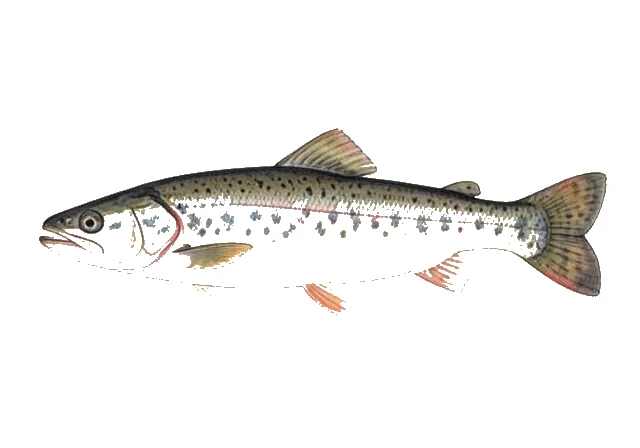
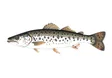
Bloody Stickleback field guide illustration

About Bloody Stickleback

Apeltes is a monospecific genus old ray-finned fish belonging to the family Gasterosteidae, the sticklebacks. The only species in the genus is A. quadracus, the fourspine stickleback or bloody stickleback, which lives in freshwater, brackish and benthopelagic environments of the northwestern Atlantic Ocean between Newfoundland and South Carolina.

Appearance

The fourspine stickleback is the smallest member of Gasterosteidae. It typically has either four or five dorsal spines, but may have as many as seven. It has an elongated fusiform body that is spotted brown to olive green except for the underside. Its belly is silvery white. Males tend to be darker than females and develop red pelvic spines. The first three dorsal spines are close together and stick out at acute angles, each with a triangular membrane. The fourth spine is straight and associated with the dorsal fin. Its lateral line ends blow the origin of the second dorsal fin. Its pelvic fins sit almost right below the pectoral fins in the thoracic region. The species does not have scales. They usually grow to be about 4 centimeters, but can reach 5 to 6 centimeters in length.

Distribution

The species is found from Newfoundland and Quebec southward to North Carolina, living close to freshwater shores in well-vegetated areas. It has been introduced to a few freshwater bodies in Pennsylvania, Alabama, New Jersey, and in Lake Superior.

Ecology

Fourspine sticklebacks are largely solitary, spending most of their time near the bottom of lakes. Their diet consists of microscopic invertebrates and plankton. Fourspine stickleback typically breed at one year of age, though some individuals may survive to breed again at age two. Their breeding season lasts from April until late July, often breeding at the same time and location as three other stickleback species (threespine, ninespine, and blackspotted stickleback). Males establish territories and construct nests of vegetation either on the bottom or on underwater structures, and may construct as many as five stacked nests. Once he has attracted a female and fertilized her eggs, the male watches over the nest until the eggs hatch. Females may produce several clutches of eggs per year.

Article text: Wikipedia contributors, Apeltes (source revision). Licensed under CC BY-SA 4.0. Retrieved 2026-10-12.
Diet and feeding

The FishTraits compilation records these diet categories for this species: algae or phytoplankton; invertebrates or larval fish. These are broad categories, not a claim that every individual consumes every example in a category.

Reported feeding positions include bottom feeding and surface or water-column feeding. The compilation combines published observations; diets can vary with age, locality, and available food.

Habitat preferences

Reported habitat associations include creeks, still-water habitats.

The source records associations with muck, clay or silt, sand, vegetation. An association indicates reported use, rather than an exclusive requirement.

The species is classified as tolerant of a broad range of salinities. This flag does not specify a salinity range for aquarium care.

Reproduction and parental care

The compilation reports a representative maturity age of 1 years. Its maturity field summarizes mean, median, or modal estimates, usually for females; male estimates can be used when female data are unavailable. It is not a fixed age at which every fish first breeds.

Recorded spawning months are May, Jun, Jul, Aug for the source’s reporting region (CN). This is a regional calendar, not a range-wide schedule.

Size and recorded longevity

FishTraits reports a maximum total length of 6.6 centimetres. Some entries use an estimated asymptotic length; this value should not be treated as a certified record catch.

Recorded longevity in the compilation is 2.3 years. Wild observations were preferred, but captive records were accepted where wild records were unavailable, and unspecified records were assumed wild. The value is not a guaranteed wild lifespan or an aquarium life expectancy.

Identification and appearance

The fourspine stickleback has a bony ridge on each side of the abdomen, making it triangular in cross-section, with flat belly and sharp back; it is fusiform from the side view, tapering to a pointed nose and to a slim caudal peduncle. There are two to four free dorsal spines standing close one behind the other, inclining alternately to one side or the other; another spine is attached to the dorsal fin by the fin membrane; the anal fin is similarly preceded by an attached spine, and each ventral fin is represented by a stouter curved spine, strongly saw-edged, followed by about two slender rays. The dorsal fin stands over the anal as in the nine-spined species, but both these fins are more rounded in outline, while the caudal fin is relatively longer and narrower than in any of our other stickleback species. Further details are provided in Scott and Crossman (1973); Smith (1985); Robins et al. (1986); Page and Burr (1991).

Native range

Europe and the Atlantic coast of North America. Atlantic Slope from the Gulf of St. Lawrence to Trent River system, North Carolina. Mostly a nearshore marine species, but far inland populations occur in lakes in Nova Scotia, and in Hudson, Delaware, and Susquehanna River drainages (Page and Burr 1991).

Habitat and ecology

Apeltes quadracus often live sympatrically with other species of stickleback throughout their native range, though they are generally solitary with regard to other members of their own species. Individuals are often observed perched among bottom debris and vegetation, never in open water, hovering over a patch of substrate, picking at it frequently, then moving on to another patch (Delbeek and Williams 1987). Delbeek and Williams (1987) also found that fourspine stickleback fed exclusively on the bottom, wither among benthic vegetation or from the substrate, the most abundant organisms in their diets being diatoms, nauplii, nematodes, ostracods, and cyclopods. During spawning, the males of this species establish territories and build small nests in which females lay their eggs (Courtenay 1985). Them male then chases the female away and cares for the eggs until they hatch. Courtenay (1985) also found that, unlike other stickleback species, male Apeltes tend multiple nests at one time in both laboratory and natural breeding site observations. Fourspine stickleback also has the widest range of salinity tolerance of any North American species of stickleback (Holm and Hamilton 1988).

Introduction history

Bait shops in Alabama were found to be selling stickleback mixed in with fathead minnows at the time the specimens were collected (N. Nichols, pers. comm.).

Ecological impacts

Confined to coasts. Rapid increases of Apeltes in Thunder Bay suggests the species is displacing native stickleback species at a rapid rate (Stephenson and Momot 2000).

Range

Where it lives

Share of 918 GBIF observation records with a state location, across 12 states. The orange dots are USGS stream-survey sites where this species was caught.
0%
27.3%
Share of 918 GBIF observation records with a state location, across 12 states. The orange dots are USGS stream-survey sites where this species was caught.

A blank area on the dot layer usually means nobody sampled there, not that the fish is absent. Turn on “every survey site” to see where the survey looked.

The USGS stream survey caught it at 15 of its sites, in 5 states. That survey and the GBIF records are two different counts of two different things, so the site keeps them apart.

Habitat

Water and movement

Water
WoRMS records this species in fresh water, brackish water and the sea.
USGS NAS habitat
Freshwater;Brackish
US status
Native transplant — native to part of the United States, moved to other waters inside it.
Migration
Migratory
Pattern
  • Diadromous — moves between fresh water and the sea
  • Anadromous — spawns in fresh water, grows at sea

Classification

Taxonomy

Kingdom
Animalia
Phylum
Chordata
Superclass
Actinopterygii
Class
Teleostei
Order
Gasterosteiformes
Genus
Apeltes
Species
Apeltes quadracus
ITIS TSN
166397
WoRMS AphiaID
159436
GBIF key
5204681
Outside the US
ITIS also files it in Canada.

Common questions about Bloody Stickleback

What is the scientific name of Bloody Stickleback?
The scientific name is Apeltes quadracus, in the family Gasterosteidae. Classification follows ITIS.
Does Bloody Stickleback live in fresh water or salt water?
WoRMS records this species in fresh water, brackish water and the sea.
Where has Bloody Stickleback been recorded in the United States?
GBIF has observations in 12 states, with the most records in Massachusetts, Maryland, New York. The map shows observation records, which do not establish the complete natural range.

Same family

More Gasterosteidae